Get Full Government Meeting Transcripts, Videos, & Alerts Forever!
Get email alerts on the Education topic
No spam. Unsubscribe anytime.
Board chair previews State of the Schools visits, staff highlights Pixel program
Summary
Pasco School District staff previewed State of the Schools presentations for Captain Gray Elementary, Robert Frost Elementary and the Pasco Digital Learning Academy, noting the Pixel program serves grades 3–8 and is "100% BEA funded;" iPAL data were not presented because that program is asynchronous.
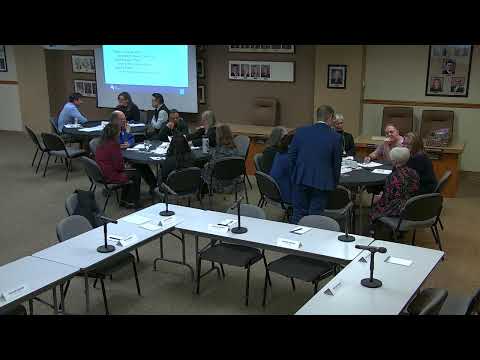
The Pasco School District held a study session in which district staff previewed upcoming "State of the Schools" presentations and school visits, telling board members what data they would see and how the session would be organized.
A board leader welcomed Miss Goble and other staff to introduce the review, then a presenter addressed the board: "Good evening, board president Lerman and members of the board," the presenter said, and explained the session would cover three schools. "Pasco Digital Learning Academy has, like, 3 different parts," the presenter said, adding that "the data that you see is actually our pixel program" and that "pixel program is actually grades 3 through 8, and they're 100% BEA funded." The presenter also noted iPAL students were not included in the presented data because they learn asynchronously.
Why it matters: The briefing set expectations for what data the board will review during school visits and clarified which student cohorts are represented in the district's presented metrics. That distinction matters for comparability: the presenter said the Pixel cohort is the one with complete, BEA-funded data while iPAL operates on an asynchronous model and therefore has no comparable dataset for this presentation.
District staff also introduced principals and leaders from Captain Gray Elementary and Robert Frost Elementary and pointed out that the two schools have similar demographic profiles. To manage time during breakout presentations, staff instructed board members to sit at assigned tables for 20-minute sessions and asked for a board member to act as a timer.
The study session concluded with the board leader thanking staff for the presentations and inviting attendees to remain for the regular board meeting at 6:30 p.m.
The session consisted of preparatory remarks and logistics; no formal motions or votes were recorded in the transcript.