Get AI Briefings, Transcripts & Alerts on Local & National Government Meetings — Forever.
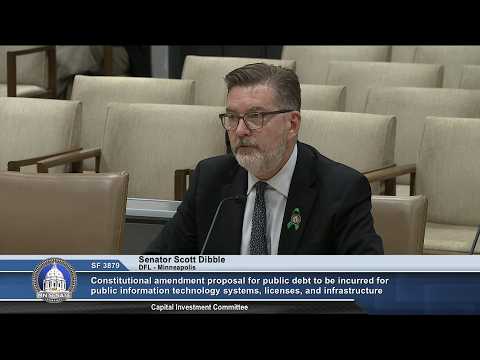
Senator Dibble urges constitutional change to let Minnesota bond for IT systems; lawmakers debate costs and scope
Loading...
Summary
Senator Dibble proposed a constitutional amendment (SF 38‑79) to let the state issue bonds for public IT and data systems, arguing modern IT is critical infrastructure; supporters included county IT leaders and nonprofit data groups, while some senators warned of precedent, cost and broad language that could include recurring licenses.
Senator Jim Dibble brought forward Senate File 38‑79 and asked the Senate Capital Investment Committee to consider a constitutional amendment that would allow the state to issue bonds for public information technology systems and data infrastructure.
"Our bonding system was designed for a different era," Dibble told the committee. "Data systems and cybersecurity systems are infrastructure that now power nearly every single public service we provide." He said bonding could let Minnesota finance long‑lived IT investments over time and guard against the escalating cost of repeatedly patching decades‑old systems.
Supporters from counties and nonprofit groups said the change would help local governments plan and pay for major system replacements. Matt Peabody, director of information technology solutions and chair of the Minnesota County IT Leadership Association, said counties rely on one‑time grants and operational budgets that can leave systems vulnerable to cyberattacks and long‑term failure. "We strongly believe IT infrastructure falls into this category," Peabody said, "and many times it's woven into other sectors that we bond for, like water and transportation."
Humphrey Policy Fellows and data leaders emphasized practical consequences: Denise Schmeidja of the Education Partnerships Coalition described the difficulty counties and agencies face in accessing and using siloed data, while fellows working on the project described how outdated county and city systems hinder daily operations, from water treatment to EMS and school portals.
But several senators cautioned against broad constitutional language and unfamiliar financing mechanisms. Senator Rebecca Rasmussen warned a constitutional change that could include recurring licenses might expand bonding to items that are not capital investments, saying "that could make these investments more expensive over time" once interest is factored in. Senator Nelson questioned whether the amendment would fit under GEO bond rules or other financing tools.
Committee counsel and budget staff explained distinctions among general obligation bonds, appropriation bonds and certificates of participation. They noted appropriation bonds raise different legal and tax considerations and that appropriation mechanisms have been used for other projects. Testimony from county and state IT representatives suggested some projects could qualify for significant federal match dollars, particularly for Medicaid‑related systems, which could reduce state net costs.
The committee allowed testimony from several local IT leaders and policy fellows and laid the bill over for further consideration. Senator Dibble said the measure is meant to "open the conversation" rather than mandate bonding, and several members asked staff to produce additional analysis of scope, fiscal impact, and guardrails to separate capitalized IT investments from ongoing operating costs.
Next steps: the committee laid SF 38‑79 over for further review; staff and members asked for additional detail on eligibility, financing mechanisms, and examples of anticipated projects before any final action.