Get AI Briefings, Transcripts & Alerts on Local & National Government Meetings — Forever.
Experts to task force: phased timelines, technical support and oversight used to reduce subminimum wages in other states
Loading...
Summary
Oklahoma presenters reviewed state strategies for phasing out Section 14(c) certificates, highlighting Illinois' HB 793 (5-year phase-out), Oregon SB 494 (ban and mandatory transformation), and Washington's technical-support/outcome-payment model; the task force sought data on sequencing, funding and benefits planning.
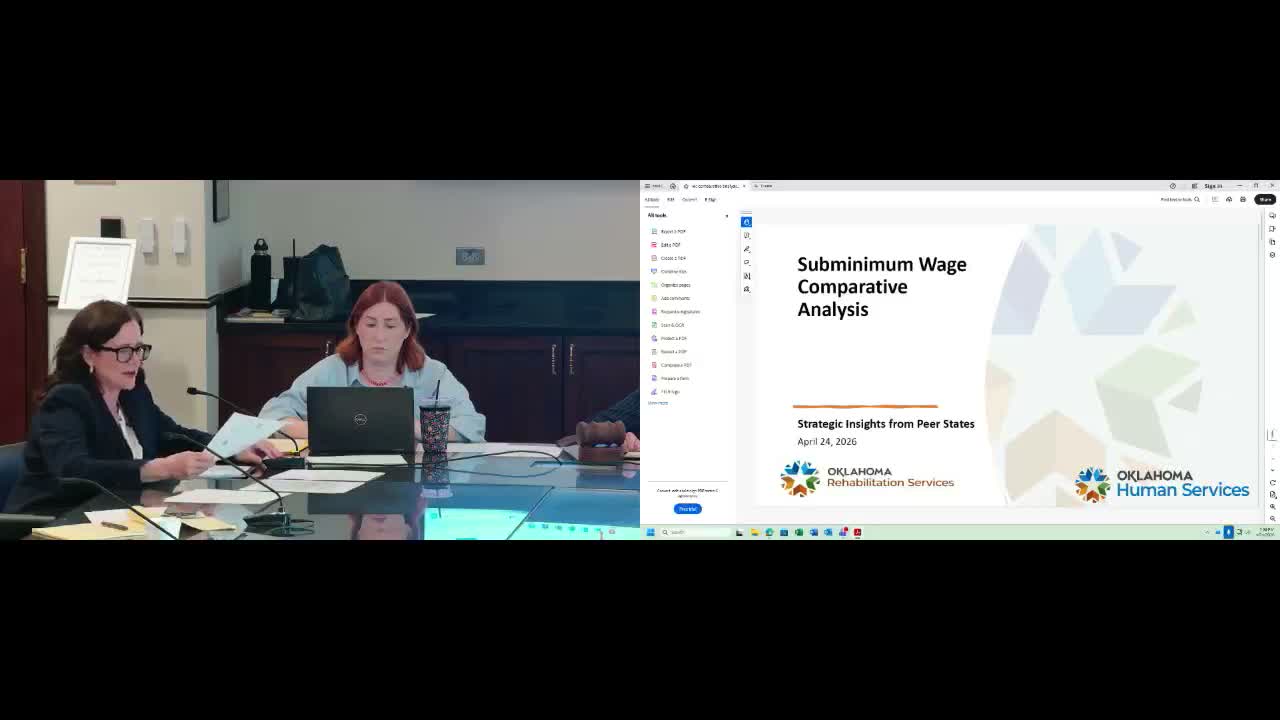
State researchers briefed the Oklahoma legislative task force on policy choices other states used to limit or eliminate subminimum wages under Section 14(c).
Mark Kinison, vocational rehabilitation administrator with Oklahoma Rehabilitation Services, summarized a comparative review: some states enacted phased legislative bans with provider transition plans and reporting requirements (Illinois’ Dignity and Pay Act, HB 793); others set hard bans with mandatory conversion (Oregon’s SB 494); still others emphasized technical assistance, outcome payments and restrictions on new entries to 14(c) programs (Washington). Kinison said national estimates show a marked decline from past decades and cited roughly 40,000 individuals under Section 14(c) nationally as of November 2024.
How other states approached transitions: presenters described three common elements — (1) a legislative timeline (often around five years) for phasing or banning certificates, (2) targeted technical assistance and outcome payments to providers to develop competitive integrated employment, and (3) oversight and reporting requirements to track transitions and outcomes. Illinois’ approach, described by presenters, included annual progress reports to the governor and legislature and required providers to submit transition plans.
Tradeoffs and pitfalls: presenters said Kansas’ subsidy program to underwrite provider wage increases encountered administrative burdens; targeted technical assistance was more effective. Task force members raised the risk that some people currently in sheltered workshops may not move immediately into community employment; presenters said approximately 40% who were receiving minimum wage in transition moved into community jobs while many others moved into other service areas or were of retirement age.
What lawmakers asked for: members pressed for better data on sequencing and braiding funds across DRS, DDS and Medicaid, clearer benefits-planning resources so families are not deterred by fear of losing disability supports, and examples of employer-engagement measures (Project SEARCH, reverse job fairs, employer tax credits). Kinison and colleagues offered to provide more detailed implementation materials and examples of state governance structures and funding approaches.
Quote: “There was a legal requirement passed in (Illinois) with a 5 year phased out transition phase, statewide information plan, funding and technical support for providers, and strong oversight and reporting,” Kinison said.
Next steps: The task force asked staff to return in June with concrete options, sample timelines, and a menu of supports (technical assistance, benefits planning, employer outreach) that could be piloted or adapted in Oklahoma. No votes or binding commitments were made at this session.