Get Full Government Meeting Transcripts, Videos, & Alerts Forever!
Get email alerts on the Data Center Policy topic
No spam. Unsubscribe anytime.
Residents press Cumberland County for moratorium, stricter rules on AI data centers; commissioners say they will weigh next steps
Summary
Dozens of residents urged the Cumberland County Board of Commissioners on March 23 to impose a temporary moratorium and stronger zoning and reporting for large data centers, citing water, air, noise, health and equity concerns; the board asked the county attorney about adopting a moratorium under General Statute 160D and said it will consider next steps.
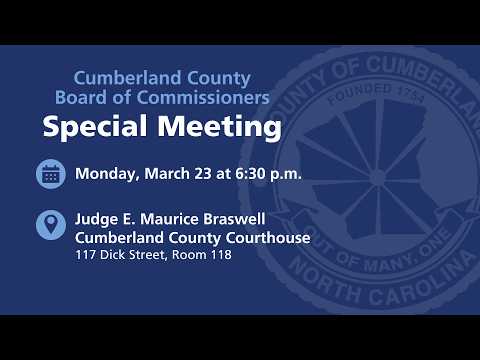
FAYETTEVILLE, N.C. — Dozens of residents on March 23 urged the Cumberland County Board of Commissioners to pause and tighten rules before permitting large AI and data-center projects, raising water, air, noise, public-health and equity concerns and pressing the board to adopt at least a one-year moratorium.
At a special public-input meeting called by Chairman DeBier, speakers from neighborhoods across Cumberland County described perceived risks posed by data centers, including large daily water withdrawals, diesel backup-generator emissions, light and noise pollution, and limited local job creation. "Let's put a one-year moratorium in place," said Lorena Murray of Lockwood Road, who told commissioners the county should study and adopt restrictions that "contribute to our way of life rather than take away from it."
The meeting drew a mix of personal testimony and technical appeals. Dr. Christina White, a board-certified internal-medicine physician who works in Cumberland County, urged officials to consider published studies linking large-scale data operations to public-health costs and said air and water quality impacts should be accounted for in any policy. Liz Reeser, chair of the Eastover Sanitary District, contrasted what she called limited local water capacity with the large volumes data centers can require: "For us to even consider as a utility the effects on us, we don't have the capacity," she said.
Representatives of environmental and civil-society groups offered specific policy recommendations. Casey Moravec, an attorney at the Southern Environmental Law Center, recommended adopting a temporary moratorium while the county amends its zoning code to classify data centers as a special-use that requires a public hearing and special-use permit, to limit siting to planned industrial districts, and to require transparent reporting of energy and water use and measures to limit generator run hours and discharge contamination. Janelle Kimbrough of Sustainable Sandhills urged protections to prevent siting in underserved or vulnerable communities and insisted on monitoring for PFAS and other contaminants.
Speakers described local history and cumulative harms. Norvell Henderson, who said his family lives near the Ken Morse facility, linked present concerns to long-standing contamination and argued communities already bearing legacy pollution should not be asked to shoulder additional risk from new industrial users. Several speakers said developers commonly offer promises that fail to materialize and that counties and cities must preserve authority and require enforceable safeguards.
Commissioners responded at the end of the forum. Commissioner Tyson asked the county attorney what would be required to adopt a moratorium; the attorney said the board must make four statutory findings and follow notice and hearing rules, noting different notice procedures depending on whether the moratorium is longer than 60 days under General Statute 160D. Commissioner Adams said he would vote for a moratorium and urged constituents to engage state legislators as well, citing pending state bills that could preempt local zoning authority. Vice Chairman Sherman Jones said he heard strong support for one- to three-year moratoria and emphasized preserving local authority and civic participation.
No formal moratorium or ordinance was adopted at the meeting. The board closed the public comment period, thanked residents and said it would review the input and consider next steps "in a timely, thoughtful and deliberate way," Chairman DeBier said. The meeting ended after a routine motion to adjourn that the board approved unanimously.
What happens next: Commissioners and county staff will review the public input and consult the county attorney about drafting options; adopting a moratorium that lasts more than 60 days would require additional public-notice steps and a formal public hearing, the attorney said. Residents asked the board to pursue coordinated regional rules with the city and neighboring jurisdictions and to require publicly accessible reporting of water and energy usage if data centers are allowed.