Get Full Government Meeting Transcripts, Videos, & Alerts Forever!
Get email alerts on the Stormwater And Drainage topic
No spam. Unsubscribe anytime.
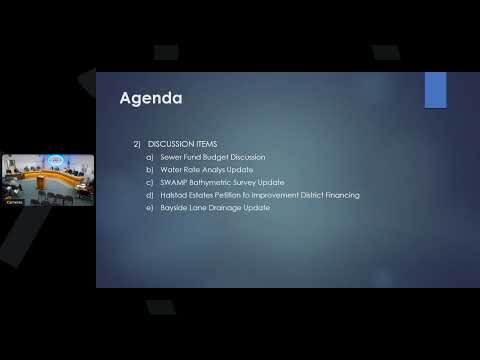
Council weighs limited, cost-shared fix for chronic Bayside drainage problem at 925
Summary
Public-works staff described repeated backyard flooding at 925 in the Bayside neighborhood and presented two repair options—an inexpensive catch-basin tie-in ($18,000–$40,000) that may not hold up in extreme storms, or a more expensive directional-boring solution. Council directed staff to seek contractor pricing and recommended a small city contribution with homeowner cost-share and a liability release if the less expensive option is chosen.
Public-works staff briefed the council on repeated drainage problems affecting a home at 925 in the Bayside neighborhood and presented two main responses: (1) install a new catch basin and connect the property to an existing line for an estimated $18,000–$40,000 depending on scope, or (2) pursue precision directional boring to install a larger through-line (higher cost and technical risk).
Staff noted video inspection and record searches show no clear recorded easement or ownership for the north–south pipe in question. "There's nothing that shows that we own it," Public Works Director Gary Peters said when asked about recorded ownership. Staff said the less-expensive option could resolve most events but might not perform in very heavy rainfall; the more expensive directional boring offers better hydraulic capacity but is costly and still requires precision to avoid existing wellheads and other constraints.
Council direction: Council discussed precedent risk (other properties with similar issues) and liability if the city accepted ownership. Several council members favored an interim, cost-shared remedy: the city would fund a modest portion (staff suggested a $15,000 contribution in discussion) and require a signed agreement from the homeowner accepting residual risk and releasing the city from future liability. Staff was directed to obtain contractor price quotes for both approaches and prepare a formal agreement for council approval at the next meeting. The resident is expected to attend the follow-up meeting.
Next steps: Staff will pursue contractor estimates, draft a homeowner agreement that limits future city liability if the city provides a partial contribution, and return with a proposal and costs for council approval.