Get Full Government Meeting Transcripts, Videos, & Alerts Forever!
Get email alerts on the County Budget topic
No spam. Unsubscribe anytime.
Hennepin County commissioner warns of deep budget cuts, urges state help to avert hospital closures
Summary
Hennepin County Commissioner Kevin Anderson told the Minnetrista City Council that federal and state cost shifts and proposed cuts to SNAP, HUD and Medicaid are creating multi‑million-dollar shortfalls; he said county leaders are pushing a potential 1% sales tax at the Legislature to help stabilize HCMC and county services.
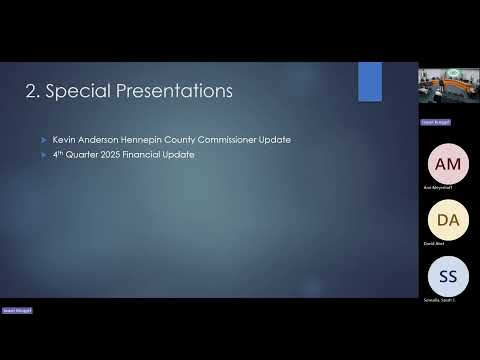
Hennepin County Commissioner Kevin Anderson told the Minnetrista City Council on March 16 that the county faces steep budget pressures from federal and state changes that could force staff reductions and service changes.
Anderson said the county has already identified roughly $20 million in federal cost shifts this year and warned of larger Medicaid and housing funding cuts ahead. “We are looking at trying to cover us of in excess of $350,000,000 every year,” he said, describing combined shortfalls across health care and human services.
The commissioner highlighted Hennepin County Medical Center (HCMC) as a high‑risk institution. Anderson said county leaders are seeking state solutions — including a proposed 1% sales tax — to preserve the hospital and related safety‑net services. “If HCMC fails, North Memorial is unlikely to succeed,” he said. “The ripple effects of the safety net crumbling would be catastrophic.”
Anderson described county efforts to control costs, including audits of providers and position management to avoid immediate layoffs where possible. He said counties across Minnesota are pushing for system modernization to reduce administrative workload caused by aging state systems and that many changes being demanded of counties are technically difficult to implement in legacy software.
Council members and residents pressed Anderson on fraud controls and whether counties have authority to stop problematic providers. Anderson said counties audit providers and report issues to state authorities but are often constrained by state rules and court orders. “Where we are able to, yes,” he said about changing contracts in suspected fraud cases.
Why it matters: Anderson framed the county’s financial strains as affecting services Minnetrista residents rely on — from library funding to emergency hospital care — and emphasized that state action or alternative revenue sources will be necessary to avoid deeper cuts.
What’s next: Anderson said county leaders will continue to press the Legislature for options this session; no final statewide action has been taken on the 1% sales tax proposal, which he described as politically difficult but under active discussion.