Get Full Government Meeting Transcripts, Videos, & Alerts Forever!
Get email alerts on the Surveillance Transparency topic
No spam. Unsubscribe anytime.
Resident urges New Prague to enable public audit logs for license-plate readers
Summary
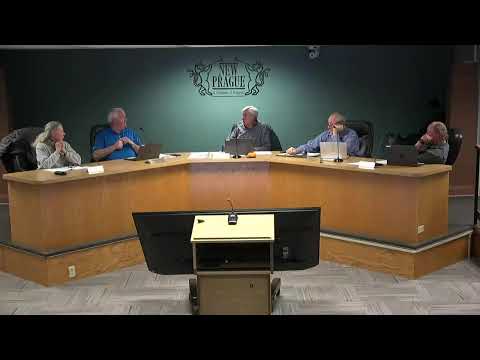
At a brief New Prague City council meeting, resident Brian Paulson urged the police department to enable Flock’s public search-audit feature for the city’s automated license-plate readers to improve transparency. Council members questioned the police chief about uses, auditing and data access; the chief said audits are independent and the portal is voluntary.
Brian Paulson, a New Prague resident, asked the City Council to direct the police department to enable the public search-audit feature on the city’s Flock Surveillance portal for automated license-plate readers (ALPRs). “Enabling this feature would let residents see the system is being used strictly within legal limits,” Paulson said, citing portal statistics that showed roughly 27,000 vehicles scanned and 167 hot-list hits in the previous 30 days.
Paulson told the council the public-audit view is a one-time enablement offered by Flock that automatically publishes policy and aggregated statistics and can provide downloadable logs showing individual searches, reasons, case numbers and dates. He said other agencies he reviewed have the feature active and that it would reduce delays for residents seeking logs.
The council questioned the department about how ALPR data is used. “It doesn’t follow people,” Chief Aplin said. He described typical uses—stolen vehicles, wanted persons, missing people or other criminal investigations—and said officers document each query with an incident report and case number before searching. “When we get the hit, we review it to see whether this person came into our community last night or this person is here,” he said.
Council members pressed on whether the portal would expose data that is confidential under state law and whether enabling public search audits is required. The chief said the transparency portal is not required by law but that the department voluntarily set one up; the formal audit required by state statute is conducted by an independent auditor on a biannual schedule and is reported to the state. He said auditors review policies, who has access and whether the department is tracking queries correctly.
Some council members and residents raised concerns about misuse or third-party access (including questions about law-enforcement sharing with federal agencies). The chief said ALPR alerts are triggers for review, not constant surveillance: a hot-list match creates an alert that officers then verify against the vehicle and incident context before action is taken. He also said the ALPR hardware and maintenance are contractor-managed under the city’s contract with the vendor.
The council did not take a formal vote on enabling the feature at the meeting. Members said they would expect staff to report audit results and usage data after the upcoming audit so the council can consider whether to direct the department to enable the public search audit. The chief estimated audit results could be available two to three weeks after auditors visit; staff said an audit is expected before or around March and that the city plans to align the ALPR audit with its body-camera audit to reduce duplicative visits.
Next steps: the council will review audit results and staff follow-up; no policy change was adopted at the meeting.