Get Full Government Meeting Transcripts, Videos, & Alerts Forever!
Get email alerts on the Land Use Code Udc topic
No spam. Unsubscribe anytime.
Bozeman commission reviews rewritten land-use code and MLUPA-driven process changes ahead of December hearings
Summary
City staff and consultants briefed commissioners on the Unified Development Code rewrite and how the Montana Land Use Planning Act will change review, notice and appeals; staff will release a revised draft and a table of changes ahead of Dec. 2 public hearings. Residents urged action on housing and neighborhood protections during public comment.
Bozeman City staff and consultants conducted a work session on Nov. 10 to prepare the City Commission for upcoming public hearings on a proposed repeal and replacement of the Unified Development Code (Chapter 38).
City Manager Wynne and senior planner Chris Saunders outlined the scope and schedule of the three-year UDC update, which has produced multiple draft versions and extensive public engagement since the project began. Saunders said the draft was released Sept. 19 and that the Community Development Board has been taking public comment; that board is expected to finish its deliberations and forward recommendations to the commission before the Dec. 2 hearing.
Why it matters: The update implements changes required by the Montana Land Use Planning Act (MLUPA) and restructures local review procedures. Those changes affect how people are notified of proposed map or text amendments, who makes initial decisions on administrative applications, and how appeals move through the system — items that directly affect developers, neighbors and community groups.
Saunders summarized key procedural changes driven by MLUPA and staff recommendations. Among the most notable: the city is proposing to expand mailed notice for policy-level zone map amendments from 200 to 300 feet to reach more potentially affected neighbors; the state law has removed the traditional “protest/reclaim” mechanism; and many administrative decisions will be made at staff level with appeal paths to the Community Development Board and, if further appealed, to the City Commission and then to District Court. Saunders said staff will provide a revised draft that incorporates minor, technical corrections and a separate list or side-by-side showing of substantive Community Development Board recommendations so commissioners and the public can compare versions.
City Clerk Mike Moss explained where the public can find the code and the upcoming changes online and noted that the municipal code vendor ordinarily codifies new ordinances on a quarterly schedule.
Community Development Board recommendations: Staff reported the board has recommended several targeted revisions so far, including changes to the Northeast HMU purpose statement, higher allowed restaurant sizes in that district, a reduction in minimum ground-floor height in certain commercial districts (from 15 to 12 feet), and adjustments to minimum residential densities in several districts. Staff said the board has tabled or failed on some motions and will consider more changes at its Nov. 17 meeting.
Commissioner questions focused on implementation details: commissioners asked what constitutes ‘‘substantial compliance’’ at different review stages, whether the Commission can reclaim authority over administrative decisions, and how appeals and standing will work under MLUPA. City Attorney Sullivan and staff clarified that MLUPA defines appeal paths and standing (aggrieved person) and that the statute does not provide an explicit mechanism for the Commission to reclaim administrative decisions; appeals of legislative acts instead proceed directly to District Court after final action by the Commission.
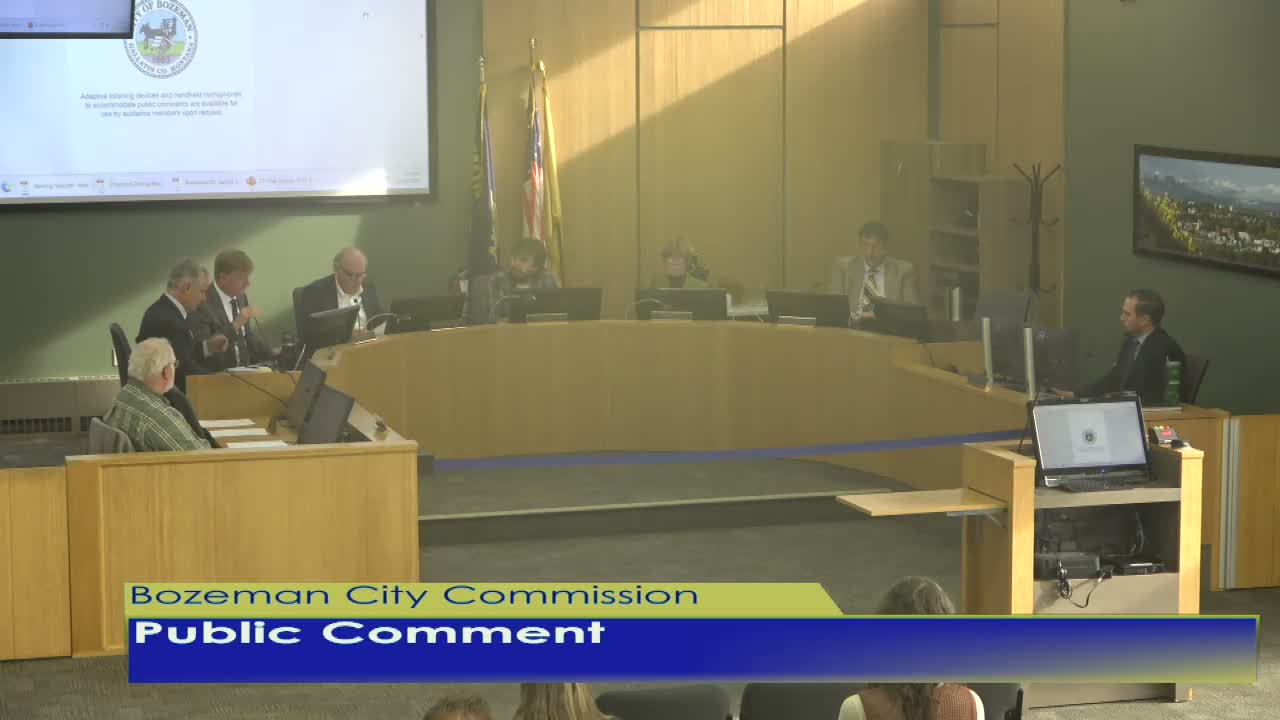
Public comment reflected a range of views. Lauren Miley of Forward Montana urged the Commission to adopt the version of the UDC presented to the public to move other housing and funding solutions forward: “I urge this commission to vote to pass the version of the UDC presented this December so that we can solidify the hard work this community, staff, development board, and the commission has put forth,” she said. Other residents and neighborhood representatives asked for more transparency and data — including GIS mapping showing where proposed zoning changes would substantially increase height or density — and pressed for protections for existing homes, historic areas and neighborhood character.
Staff commitments and next steps: Saunders and Director George said staff will release the revised draft and a table noting every change between the Sept. 19 draft and the board’s recommendations as part of the commission packet. Commissioners favored incorporating minor “cleanup” edits in a revised draft but asked staff to clearly flag substantive changes for explicit discussion. The Commission set public hearings on Dec. 2 (possible direction/revisions) and additional sessions later in December; staff emphasized that the effective date for any adopted ordinance will be set with implementation timing in mind to avoid confusion during the holiday season.
The Commission did not take a final vote on the UDC at the Nov. 10 work session; the meeting served to clarify process, identify outstanding policy questions and direct staff on how to present Board recommendations and draft changes ahead of the December hearings.