Get Full Government Meeting Transcripts, Videos, & Alerts Forever!
Get email alerts on the Parks topic
No spam. Unsubscribe anytime.
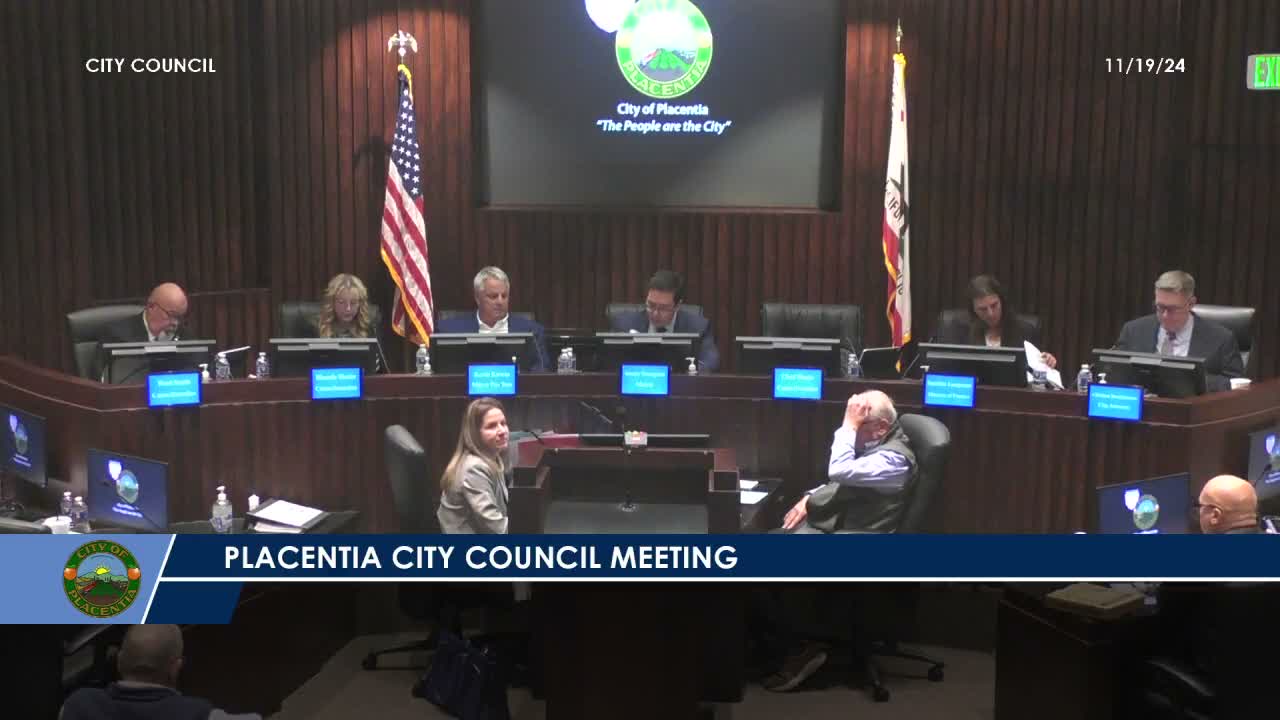
Placentia council tables $2.6M Kramer Park dog park after cost and outreach concerns
Summary
Council members voted 5–0 to table a proposed 35% design for a Kramer Park dog park after staff estimated about $2.6 million for a permanent design and council and residents urged further community input and lower-cost temporary alternatives.
Placentia City Council members on Nov. 19 voted unanimously to table consideration of a proposed dog park at Kramer Park after discussion about cost, location and community outreach.
Community Services Director Lydia Godfield and RHA designer David Black presented 35% design renderings for a dog park that would include separate large- and small-dog areas, synthetic turf, grading and perimeter masonry and chain‑link fencing. Staff said the conceptual cost to build the full project was approximately $2.6 million and noted the city currently has $56,002.50 budgeted in the CIP for the concept-phase work.
Council members and residents questioned whether the proposed location would create noise or visual impacts for one nearby residence, whether synthetic turf would become too hot in summer, and whether the city should pursue lower-cost temporary or pop-up dog-park pilots before committing to a large permanent build. Several council members suggested alternative locations within Kramer Park that could reuse existing fence lines or dugouts to reduce initial costs.
Council members also discussed potential third-party funding. Councilmember Smith and others noted the Placentia Police K-9 Foundation and local service clubs had expressed interest in contributing, and members cited examples in other cities where nonprofits or volunteer groups financed or supported dog-park construction and maintenance.
After public comment and council discussion, Councilmember Shader moved to table the item so staff could pursue additional community outreach and examine lower-cost interim options; the motion was seconded and passed 5–0.
Next steps: Staff will not proceed to 100% design at this time; instead, the city will pursue additional community input, look at temporary‑park pilots and explore sponsorship or foundation funding before bringing a revised plan back to the council.