Get AI Briefings, Transcripts & Alerts on Local & National Government Meetings — Forever.
Portland Public Schools holds rightsizing listening session as district faces enrollment decline and $50 million shortfall
Loading...
Summary
At a Benson High School engagement, district leaders laid out enrollment and budget pressures driving a rightsizing process, said no school list exists yet, and asked families to prioritize guiding principles that will shape scenarios returned for public comment this fall.
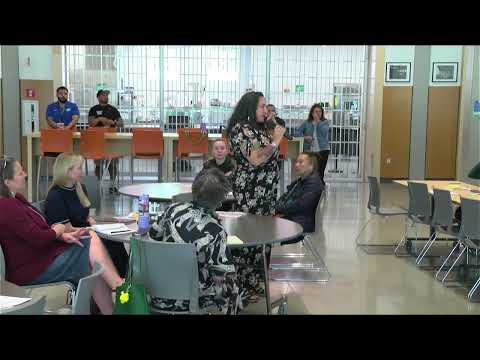
Portland Public Schools hosted a community engagement session at Benson High School on Saturday to solicit public input for a rightsizing framework the district says is needed after years of declining enrollment and growing budget pressure.
Nicole Watson, senior director of family and community engagement, opened the session and explained that attendees could provide feedback through interactive polling, sticky notes and small-group learning labs. John Franco, the district’s senior chief of operations, told the room that Portland Public Schools has seen enrollment fall “about a 12 [percent] decline” since the pandemic — steeper than the statewide average — and that the district projects a roughly $50,000,000 budget shortfall next year.
"This first phase is truly about getting feedback on guiding principles that you would like the board to consider as we move this work forward," Franco said, stressing that "there's absolutely no list" of schools under consideration at this stage.
The session combined brief presentations from district staff with facilitated breakout activities. Dr. Emily Glasgow, senior director of PK–5 academics, led an exercise asking families to define what a "well-resourced" school looks like, prompting attendees to list priorities such as consistent curriculum, arts, after-school programming and access to materials and specialists.
Parents and other community members used the microphone and live chat to press the district on several concerns. Tracy Gluckman, a parent from Dunaway Elementary, said the top priorities were “adequate number of adults in the classroom to support students and the teachers,” stronger special-education supports and a full-time librarian. A Buckman parent described current cuts that will combine grades and reduce enrichment programs, and asked whether the district could instead expand successful focus programs to retain students.
Several speakers warned that community input could be used to justify closures rather than prevent them. "This exercise feels to me like we are giving you guys data to support the decision to close schools," a Creston-area commenter said. Another attendee who identified as Native urged the district to engage tribal communities and stressed that students’ mental-health supports must be prioritized.
Richard Smith, senior director for research, assessment and accountability, described the district’s role modeling and scenario work. He said staff will use community values to set "guardrails" that guide how datasets are weighted, and that analysis will primarily be done internally with some external consultation (the district is working with the Population Research Center at Portland State University on housing and demographic trends). Smith said draft scenarios would be returned for public comment in the fall and that the board could expect a recommendation in November.
Staff also confirmed factual details attendees asked about: the district currently operates 51 pre-K classrooms funded through Preschool for All, Preschool Promise, Head Start and other funds; utilization measures vary by school type and building characteristics; and Title I status will be considered in the evaluation. On the disposition of any closed school sites, district staff said options such as sale or partnership would require future board approval.
Board members who attended reflected back common themes from the session — curriculum and enrichment, staffing and smaller class sizes, climate-controlled and functional facilities, and stronger supports for mental health — and encouraged continued participation. Vice Chair Michelle DePass said she would be seeking public input at related events, including a May 7 public forum at Lincoln High School.
The district reiterated its timeline: collect and publish poll and engagement results, develop scenarios informed by community values and data, post draft scenarios for feedback this fall, and deliver a formal recommendation to the school board in November. Franco and other staff emphasized the process is iterative and that no final decisions have been made.
Next steps: the district will publish poll results and engagement synthesis online in the coming days, hold additional community meetings with virtual options, and return scenario proposals for public comment before any formal board vote.