Get AI Briefings, Transcripts & Alerts on Local & National Government Meetings — Forever.
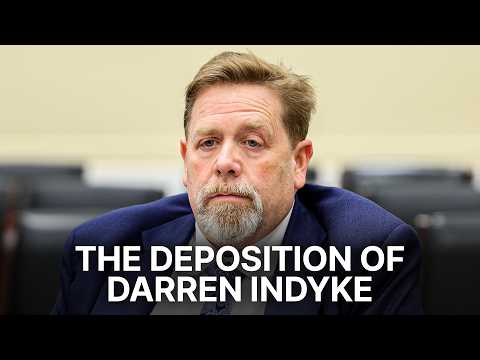
Aaron Indyk tells House Oversight he cooperated with investigators, says he had no personal knowledge of Epstein's crimes
Loading...
Summary
Aaron Indyk, co-executor of Jeffrey Epstein's estate, testified the estate cooperated with DOJ and the committee, described over $121 million paid through the estate's victim program, acknowledged large cash withdrawals and multimillion-dollar loans to himself, and said private investigators possessed hard drives but he had no personal knowledge of their provenance.
Aaron Indyk, the co-executor of Jeffrey Epstein's estate, testified under subpoena to the House Committee on Oversight and Government Reform on March 4, 2026, saying he and co-executor Richard Khan have cooperated with the committee and with the Department of Justice but that he had no personal knowledge of Epstein's criminal conduct.
Indyk read an opening statement into the record describing the estate's responses to subpoenas and its compensation program for alleged victims. "The EVCP awarded more than a $121,000,000 to 136 women," he said, and added that the estate had settled additional claims, bringing total estate payouts he cited to "more than $200,000,000." He told the committee the estate funded the program and said it was administered independently by experts in victim compensation.
The committee pressed Indyk on his role and on specifics about money that flowed through Epstein's accounts. In response to questioning about cash withdrawals that a bank's consent order flagged, Indyk said he made routine cash withdrawals and handed the funds to Epstein's accounting office for household petty cash. "I do not believe that they were at the direction of mister Epstein," he said when asked whether withdrawals had been made on Epstein's instruction, and added that he understood the cash was used for supplies, food and payroll for multiple residences.
Members also focused on transfers to Indyk and reported loans. Indyk acknowledged receiving substantial compensation over years and said he received loans from Epstein totaling roughly $7,000,000 between 2013 and 2018; he said he paid interest and that the estate plan contemplates forgiving those loans if the estate has sufficient assets. He told the committee his work for Epstein was largely transactional and that he did not socialize with Epstein.
On allegations that assistants or other persons connected to Epstein were exploited or that marriage or immigration arrangements were sham devices, Indyk repeatedly told lawmakers he had no knowledge of trafficking or abuse. "I had no knowledge whatsoever of Jeffrey Epstein's wrongdoings," he said. He said he had not witnessed sexual misconduct and that if he had known about abuse he would have stopped representing Epstein.
The committee asked whether any claimant known as "Jane Doe 4" had received a settlement from the estate. Indyk and estate counsel declined to confirm or deny specific claimant payments on grounds of confidentiality and court orders, saying they are bound by settlement confidentiality obligations and by court restrictions in some cases.
Lawmakers pressed Indyk about electronic evidence and document preservation. Indyk said he had learned through defense counsel that private investigators came into possession of hard drives, but he said he had no personal knowledge of when drives were collected, what they contain or whether they were handed to law enforcement. "I knew of the existence of hard drives," he said, "but I don't know when they came into possession, or how they came into possession."
Indyk answered repeated questions about high-profile people associated with Epstein, including Les Wexner, Ghislaine Maxwell and others. He said his dealings with those figures were transactional and that he had no personal knowledge that they were involved in criminal conduct. He described his role as co-executor in administering a complex estate and trusts, and said some bequests in Epstein's will (including a reported $50 million bequest to Indyk) are contingent on the estate's ultimate ability to pay after claims are resolved.
The committee sought records and pressed for additional documents; members said they would continue investigating outstanding document requests and clarified they plan to seek redactions before public release to protect survivor identities. Indyk testified he has not been personally interviewed by DOJ about Epstein or Maxwell and that most formal productions to investigators were handled by estate counsel.
The committee did not reach a final conclusion during the deposition; members signaled additional document requests and follow-up subpoenas could be forthcoming. The deposition record itself remains subject to committee rules on confidentiality until officially released.