Get Full Government Meeting Transcripts, Videos, & Alerts Forever!
Get email alerts on the School Safety topic
No spam. Unsubscribe anytime.
Weslaco, school district discuss sidewalks, crosswalks and crossing-guard options to boost student safety
Summary
At a joint workshop, city and school officials examined sidewalk gaps near campuses, options for crossing guards and targeted extra patrols during drop-off; staff discussed grant options and a citywide sidewalk study to prioritize connections.
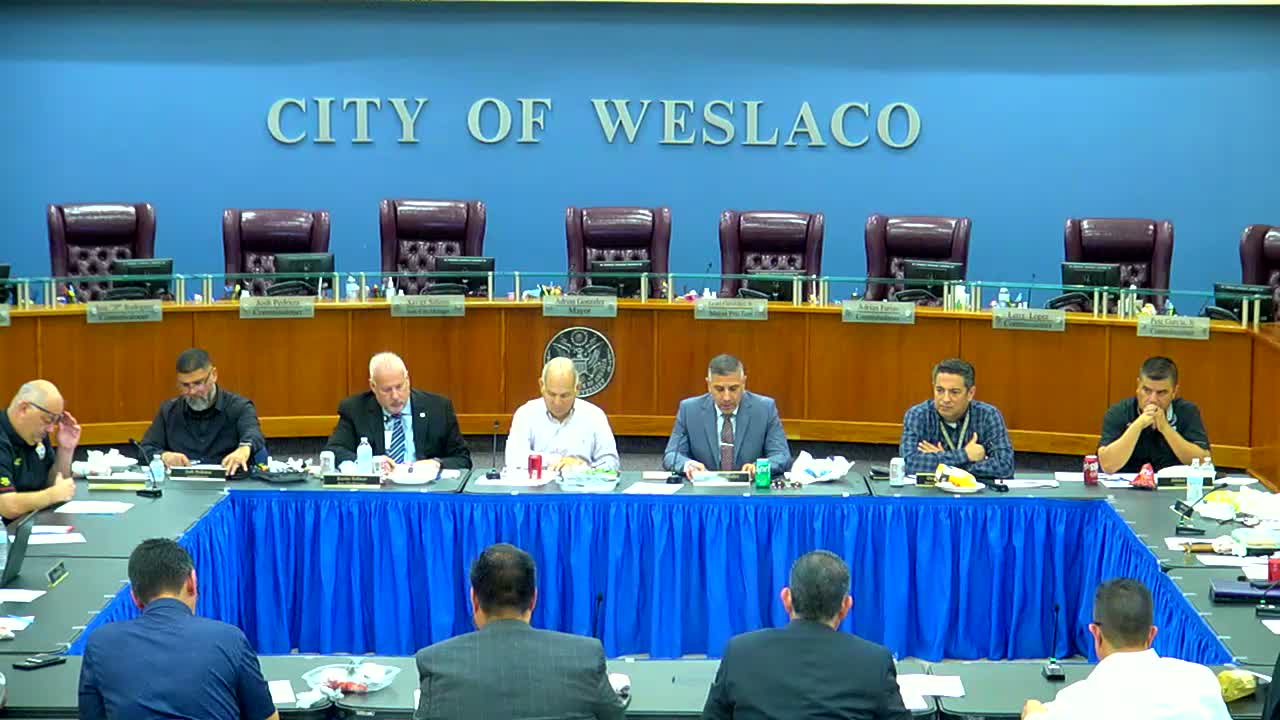
City and school officials at a June 5 workshop focused on pedestrian safety around campuses, outlining a multi‑step approach that pairs a city sidewalk study with targeted short‑term improvements and possible grant applications.
The mayor asked the district to provide a prioritized list of school locations that need sidewalks and crosswalk connections so the city can plan a study and pursue grants, including Safe Routes to School programs. City staff said engineering limits require a crosswalk to connect to existing sidewalks; “you can’t just have a crossing in the middle that’s not on a corner,” a city engineer said.
School and city representatives discussed non‑construction options to reduce risk during pick‑up and drop‑off: crosswalk/crossing guards, expanded SRO or patrol presence and custodial staff added as an extra duty. School officials said recruiting volunteers for crossing-guard duties has been difficult; district representatives said some districts have used retired employees or added the role as an extra duty for custodial staff.
City police staff said patrol resources are limited and suggested prioritizing the busiest campuses for extra coverage. The group also discussed traffic‑flow changes, parking adjustments and the possibility of offsetting release times to reduce peak congestion. Participants agreed to follow up with a list of problem campuses and to coordinate on budget timing so any requested additional patrols or equipment could be part of next year’s allocations.
No formal decisions were made; officials said staff will map problem locations, assess engineering constraints and explore grant opportunities before the next follow up.