Get Full Government Meeting Transcripts, Videos, & Alerts Forever!
Get email alerts on the Shift Scheduling topic
No spam. Unsubscribe anytime.
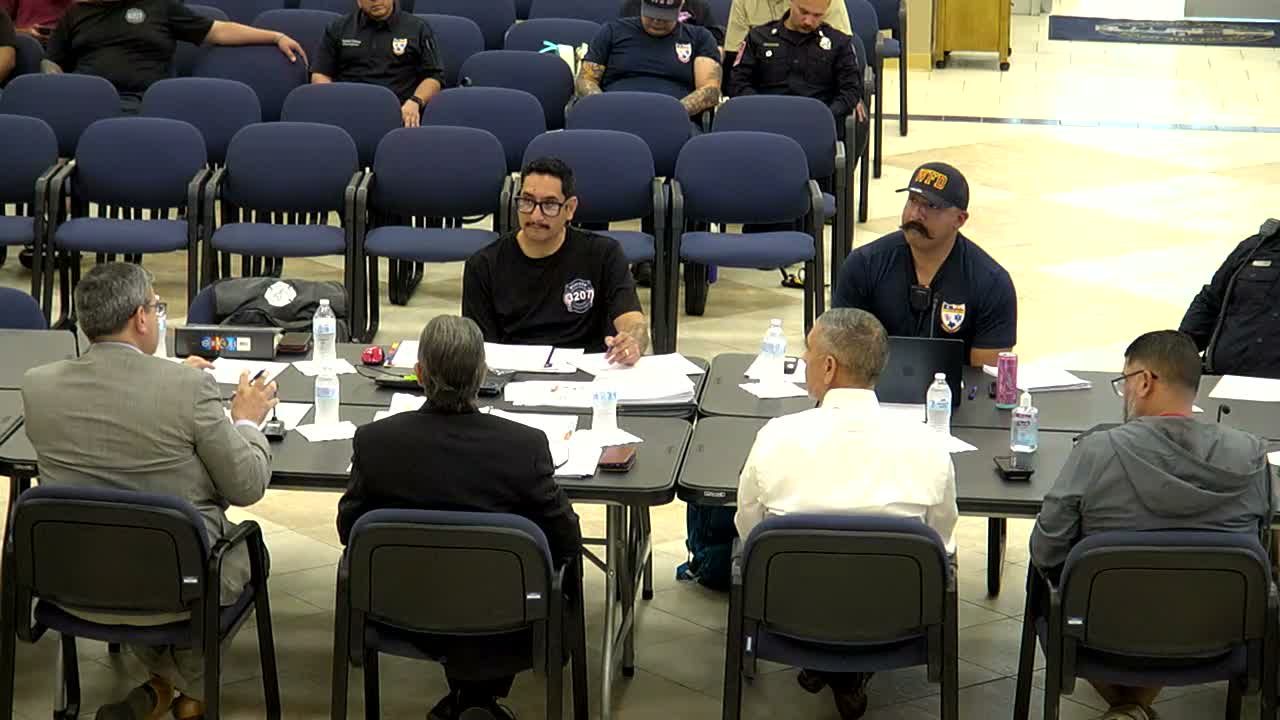
City, firefighters spar over 48/96 trial schedule and limits on off‑duty work
Summary
Negotiators debated a proposed trial 48‑hour on / 96‑hour off schedule that the city says would improve rest and safety, while the firefighters' association warned it would curtail off‑duty earnings and needs added staffing instead; the trial would run six months unless both sides agree to extend it.
Agency negotiators proposed a temporary contract amendment to trial a 48‑hour on / 96‑hour off shift schedule, saying the change would increase rest and mental‑health time for firefighters and could be extended by mutual agreement beyond a six‑month trial that would expire in March 2026 unless renewed to Sept. 30, 2026.
The city's representative said the trial would be accompanied by operational safeguards including restrictions on off‑duty employment: employees under the trial would not be allowed to work off duty within the 24 hours immediately before or after a 48‑hour shift, and staff could be required to produce a schedule of secondary employment if requested by the chief or the chief's designee.
"We're proposing this schedule mainly because it gives us the four days off to rest," a meeting participant representing the association said. "That said, we're not willing to give up our ability to work off duty on our days off." That representative warned the restriction could be burdensome and asked that the city instead fund additional staff to avoid forcing firefighters to choose between rest and off‑duty earnings.
City staff countered that the off‑duty limits were intended as a safety measure: limiting secondary employment immediately preceding or following a long shift would reduce fatigue risk for the public and for firefighters. The negotiator acknowledged the concern about limiting income and said some of the protection could be achieved via policies and supervisory checks rather than strict contract language.
Negotiators also discussed mechanics for handling vacancies and assignments under the new schedule. The city said promotional testing would be for rank (for example, lieutenant) and that assignment to prevention, suppression or administration would remain managerial decisions carried out after promotion; the association sought explicit lateral‑transfer procedures so firefighters could request moves between assignments without disrupting promotional opportunities.
No formal agreement was reached. The parties scheduled another bargaining session to continue talks and flagged the trial's fiscal and operational implications as a condition for any recommendation to the city commission.