Get Full Government Meeting Transcripts, Videos, & Alerts Forever!
Get email alerts on the Health Insurance topic
No spam. Unsubscribe anytime.
Weslaco officials say single $1.67M claim drove spike in city health costs; commission moves to executive session
Summary
At a Weslaco City Commission workshop April 1, consultant Javier Real told officials a single $1.67 million high‑cost claim and rising GLP‑1 drug use pushed the city’s loss ratio to about 163%, prompting the commission to enter executive session for more details.
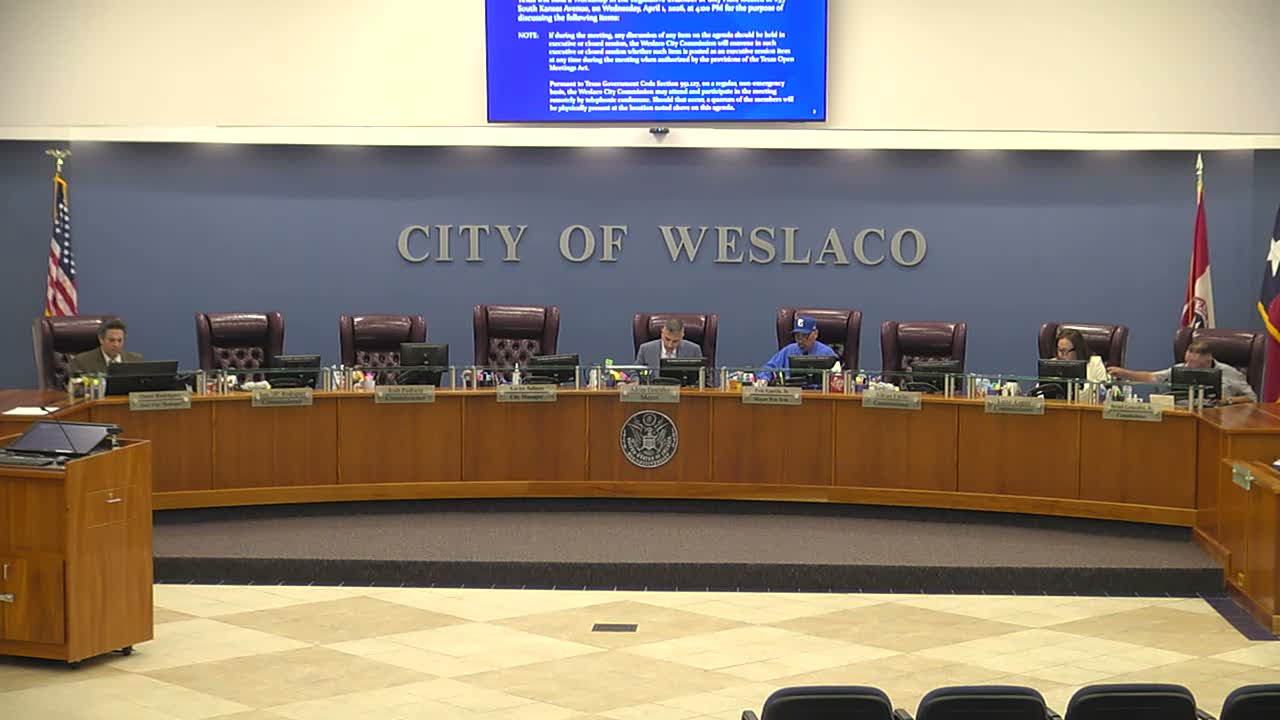
Mayor Gonzales opened a workshop on April 1 to review the city’s employee health insurance after staff and consultants presented plan‑year results through February 2026.
Javier Real of Valley Risk Consulting told the commission paid claims rose from about $1.4 million in the Oct. 2024–Feb. 2025 period to roughly $2.37 million in Oct. 2025–Feb. 2026 — a 68.7% increase. Real said one high‑cost claim accounted for roughly $1,671,000 of the year‑to‑date total and described that claimant as the primary driver of the spike. “That's a lot of money,” Mayor Gonzales said after the figure was presented.
Real also reported February adjustments from Blue Cross Blue Shield that produced a negative $114,718 medical line item and a net balance of about negative $67,000 for that month; he said he has asked BCBS for a detailed breakdown of those credits to provide to city administration.
The consultant flagged the city’s rolling 12‑month loss ratio at about 163.3% — well above an industry benchmark the presentation cited near 85% — and warned that anomalous high‑loss months can worsen renewal offers and deter carriers from quoting. “If we can get that number down, I'm hoping that we can get more participation,” Real said, urging steps the city could take ahead of any solicitation.
Real identified pharmacy trends as a contributing factor, reporting substantial increases in use and costs for GLP‑1 medications cited in the presentation (transcript: “Manjaro” and Ozempic). He gave usage examples — members on Mounjaro rose by 38% and scripts by 66.7% while Ozempic members rose from 8 to 14 and scripts from 24 to 51 — and said the city’s high diabetes prevalence makes these trends especially relevant.
Commissioners pressed for more detail on whether the high costs came from employees or dependents and whether the city audits dependent eligibility. Real said Blue Cross verifies dependents and that he will work with administration to conduct a census and dependent audit if requested. When asked whether the city could disclose the identity of the high‑cost claimant in open session, consultants and staff said they could not and recommended taking detail into a closed executive session.
The presentation included several proposals to reduce future costs, including boosting participation in wellness programs, pursuing carrier incentives for screenings and rewards, offering discounted co‑pays at local clinics, and including baseline health assessments in future solicitations. Real said such measures can help detect conditions earlier, which may reduce long‑term claim severity even though earlier detection can still produce near‑term claim costs.
After questions, the commission approved a motion to go into executive session at 4:35 p.m. to discuss the high‑cost claim and related personnel/privacy matters; the meeting returned to open session at 5:03 p.m. and the workshop was adjourned.
The city’s next step, as discussed on the record, is for staff and the consultant to supply more detailed documentation from BCBS on the February credits, to pursue a dependent census/audit with the carrier, and to bring options to increase wellness participation and carrier incentives before any future solicitation or renewal decision.