Get Full Government Meeting Transcripts, Videos, & Alerts Forever!
Get email alerts on the Public Safety topic
No spam. Unsubscribe anytime.
Council debates enforceability of tighter noise rules as state law narrows local authority
Summary
City staff proposed revisions to the noise and courts chapters to strengthen enforcement tools but warned that Senate Bill 1008 and state exemptions (short deliveries, amplified music thresholds) limit local power. Council discussed enforcement challenges including decibel measurement, sound travel, barking dogs and short‑term rentals; no ordinance was adopted.
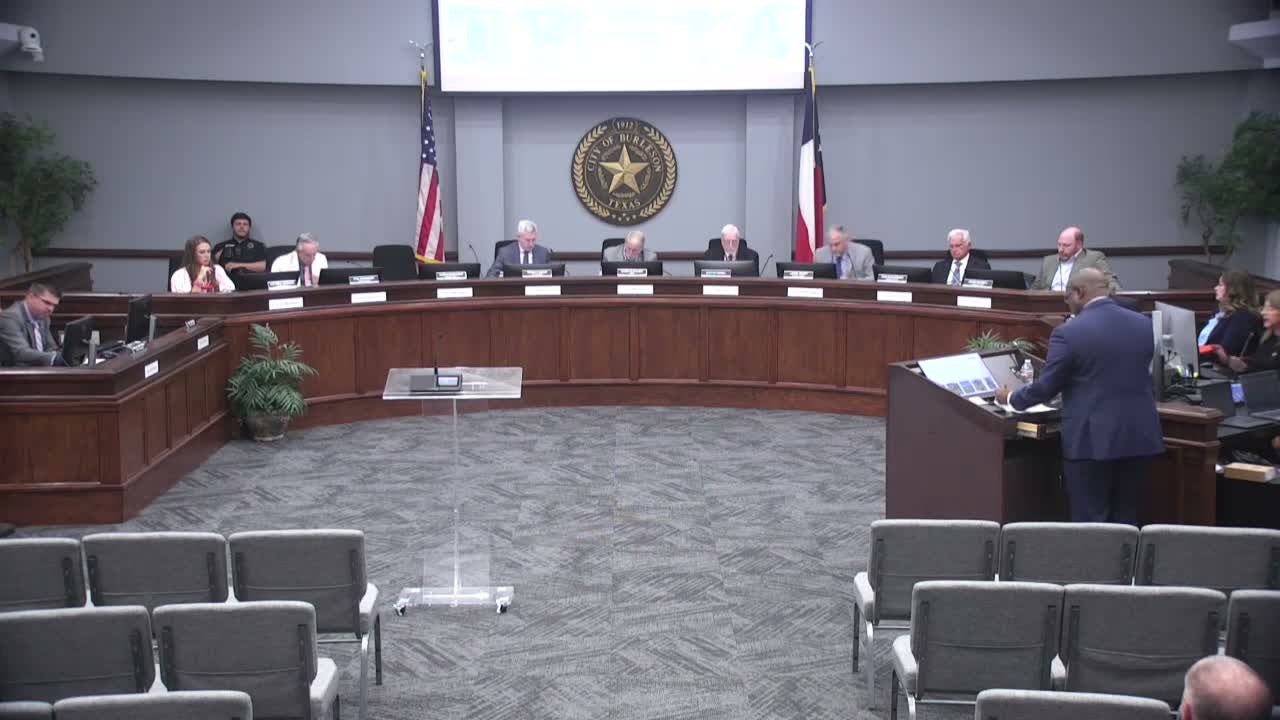
City staff presented proposed amendments to Burleson’s noise regulations Aug. 4 but emphasized state law constraints that limit local enforcement.
Development Services Director Tony McElwain told the council the draft amendments add clarity to enforcement processes, allow sworn statements and municipal court options, and would treat violations as nuisances that can be abated. Staff also noted their legal review following a 2015 federal appellate decision and more recent state legislation: Senate Bill 1008 constrains local prohibition authority and creates exemptions (for example, certain short‑duration delivery noise and amplified music within defined hours and decibel thresholds).
Council members described real enforcement challenges: measured decibel levels sometimes do not match residents’ perceptions because sound propagates along corridors, repeat disturbances such as barking dogs or short‑term rental parties are hard to capture in the moment, and decibel meters can produce readings that appear to understate nuisance effects. Staff and legal counsel acknowledged the difficulty of balancing property‑owner rights with neighbors’ rights to quiet enjoyment.
Staff said the proposed amendments will bring Burleson into compliance with state law while offering some new tools for municipal court prosecutions and nuisance abatement. Council did not take a final vote and asked staff to refine language and outline how enforcement would work operationally before returning with a proposed ordinance.
City staff referenced statutory language and jurisdictional limits that will shape any final ordinance; the presentation emphasized the practical limits of enforcement when activity is intermittent or occurs outside times when code officers are present.