Get Full Government Meeting Transcripts, Videos, & Alerts Forever!
Get email alerts on the Adult Protective Services topic
No spam. Unsubscribe anytime.
Panel advances bill to align Maryland adult‑protective‑services rules with federal standards
Summary
The Judiciary Committee voted favorably to advance House Bill 282, which updates reporting and investigation rules for abuse, neglect and exploitation of vulnerable adults to conform Maryland law with federal requirements and preserve federal funding and protections for seniors.
House Bill 282, which the Judiciary Committee considered March 17, would revise Maryland’s reporting and investigation requirements for abuse, neglect, self‑neglect and exploitation of vulnerable adults to align state law with a federal rule.
The bill sponsor’s presenter told the committee that the measure “is making a lot of changes to provisions related to the reporting and investigation of abuse, neglect, self‑neglect, and exploitation of vulnerable adults to align Maryland law with federal rule,” and that the change is intended to bring Maryland into compliance with federal requirements.
Delegate Valentine asked for a brief overview before the committee acted. The presenter said the changes will “bring us in line with federal statute and federal law,” and that by achieving compliance the state can continue to receive federal dollars tied to adult‑protective services. Committee members pressed for the compliance deadline; the presenter said states must comply by May 2028.
Members framed the change as enhancing protections for older and vulnerable residents. One lawmaker said the bill “makes it better for the citizens of Maryland” by clarifying definitions and procedures that had previously caused confusion for courts and providers.
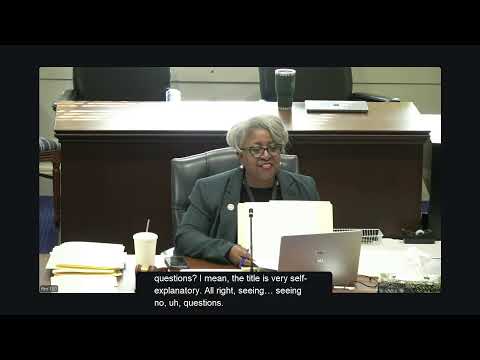
With no further questions, the committee called the roll. The clerk recorded a favorable motion with a tally reported as yes 17, no 0, abstain 0, absent 1, recused 1; the motion carried.
The committee advanced the bill to the next stage; no amendments were recorded during the committee’s consideration.
The committee’s action preserves the legislative next step; the bill will proceed to further floor or cross‑chamber consideration according to the legislature’s calendar.