Get Full Government Meeting Transcripts, Videos, & Alerts Forever!
Get email alerts on the Public Works topic
No spam. Unsubscribe anytime.
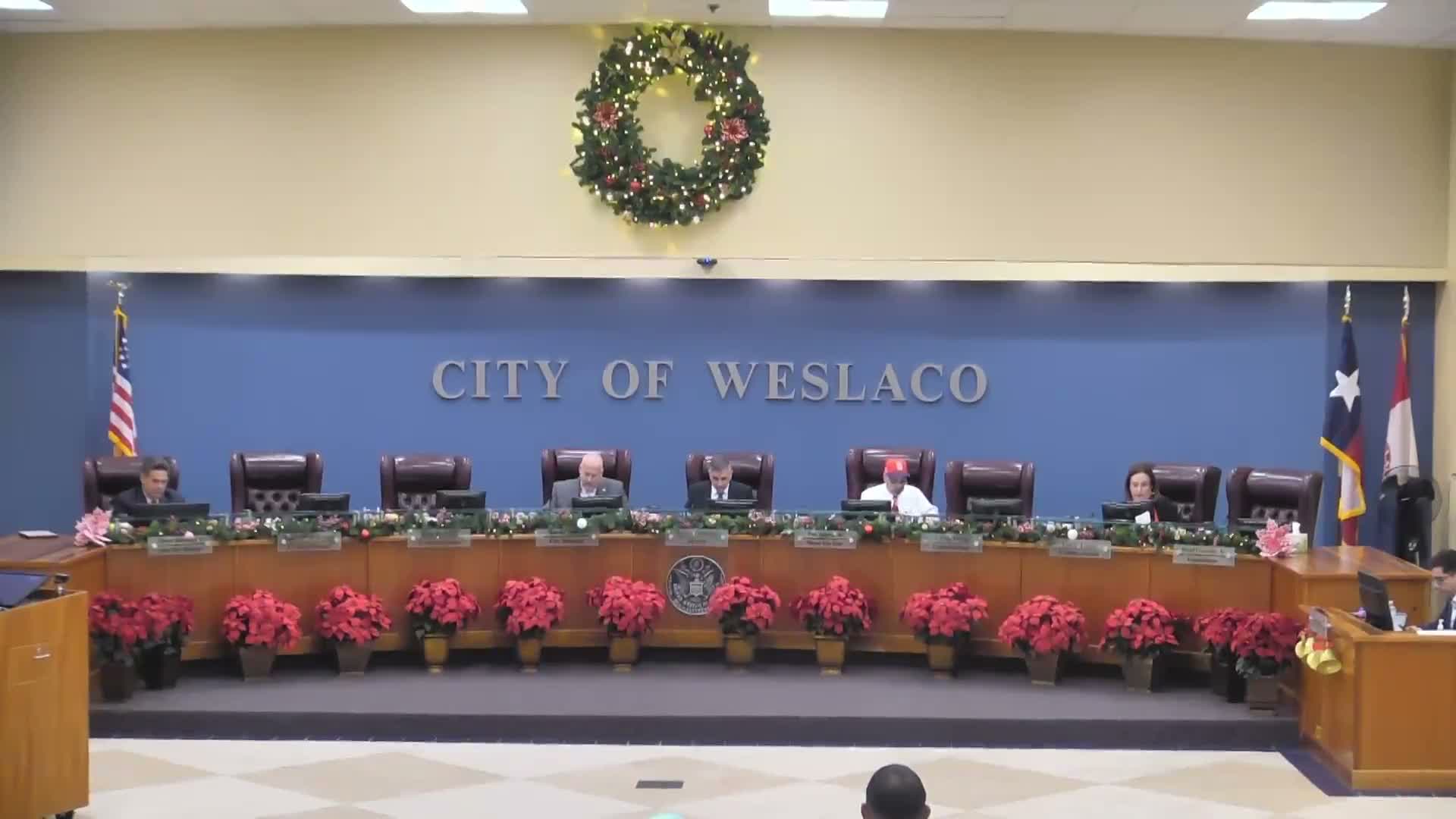
Weslaco leaders press staff to fast‑track ditch, water and street repairs after Public Works briefing
Summary
At a Dec. 16 workshop Mayor Gonzales and commissioners heard Public Works Director David Ace review 2025 projects and asked staff to prioritize shovel‑ready ditch widening, map newly found manholes and provide data to justify additional trucks and staffing.
Mayor Gonzales pressed city staff on Dec. 16 to move from planning to construction after a Public Works briefing that laid out 2025 accomplishments and a set of priorities for 2026.
David Ace, Public Works director, told the City Commission the department completed about 10 miles of roadway paving this year, added roughly 65 parking spaces at Gilbert Garza Park and received a roll‑off truck approved in this year’s budget. "Obviously, it says 225 work orders," Ace said when describing the department’s workload, referring to the number of utility cut and pothole calls logged this year.
Why it matters: Commissioners framed the briefing as a checklist for near‑term action on projects that affect flooding, traffic and daily city life. Several items the commission labeled priorities are shovel‑ready, meaning staff can begin work once funds and schedules are confirmed: widening the Cornerstone and McCoy’s ditches and repairing a cracked headwall north of John Knox Village.
Manholes and drainage mapping
Ace reported crews discovered additional manholes — "on the Pike alone, we've found 6" — and said the department will run camera inspections and collect mapping data so engineering can design capacity improvements. Mayor Gonzales and other commissioners stressed that knowing underground flow paths is essential before repaving or widening: "Let's put the pedal to the metal and let's get work done," the mayor said, urging quicker action on budgeted items.
Water breaks and repairs
The commission discussed an ongoing water repair on Sugarcane, which Ace said resulted from a weakened clamp joining dissimilar PVC pipe sections rather than a full pipe rupture. He described the repair as still in progress and noted systemic pipe age as a driver of repeated breaks: "a lot of old pipes that are probably 60 to 50 years old," the mayor said, framing the issue as a long‑term infrastructure need.
Sanitation, roll‑off business and recycling
Ace said the city is expanding roll‑off services to capture local business and increase revenue but is constrained by the availability of containers. Clean‑sweep events are planned for the holidays at the old city shop, and staff proposed gate hours to limit after‑hours illegal dumping. The city’s recycling centers are open weekdays and log about 50–65 daily visitors, which Ace estimated could total about 14,000 visits annually.
Parks and lighting
Commissioners pressed staff on park safety and lighting. Staff said some park lights run on timers (on in early morning and off in the evening) and that staff member Ruben is collecting quotes for solar lighting; one commissioner reported gathering nine quotes and planned to obtain two more. Eddie Serra, introduced as the new Parks and Recreation director, said he would inspect parks during early morning and evening hours to evaluate lighting and safety.
Equipment, staffing and next steps
Ace listed additional equipment on order — a camera truck and a vacuum truck expected around March–April — and said staff are obtaining quotes to install backup batteries at four intersections to keep traffic signals operating during outages. Commissioners asked for data to justify adding garbage trucks or other equipment and for a plan to phase purchases tied to a rate/pay study. The commission scheduled a departmental retreat in January to set priorities and align funding requests.
Formal actions
At the workshop’s close the commission moved into an executive session and later returned and voted to adjourn; no formal policy votes on the items discussed occurred during this session.
What’s next: Staff were directed to provide engineering maps, camera/inspection data for manholes and a data‑driven request for equipment/staffing so the commission can consider funding and scheduling during the next budget cycle.