Get Full Government Meeting Transcripts, Videos, & Alerts Forever!
Get email alerts on the Animal Services topic
No spam. Unsubscribe anytime.
Nonprofit offers spay-and-neuter partnership for Weslaco after $500,000 state pilot award
Summary
A PAC representative told the Weslaco commission she will establish temporary spay/neuter clinics and staff training in Weslaco using part of a $500,000 award from a state pilot grant, and urged the city to adopt TNR policies and an under‑4‑month ordinance to speed placements and reduce euthanasia.
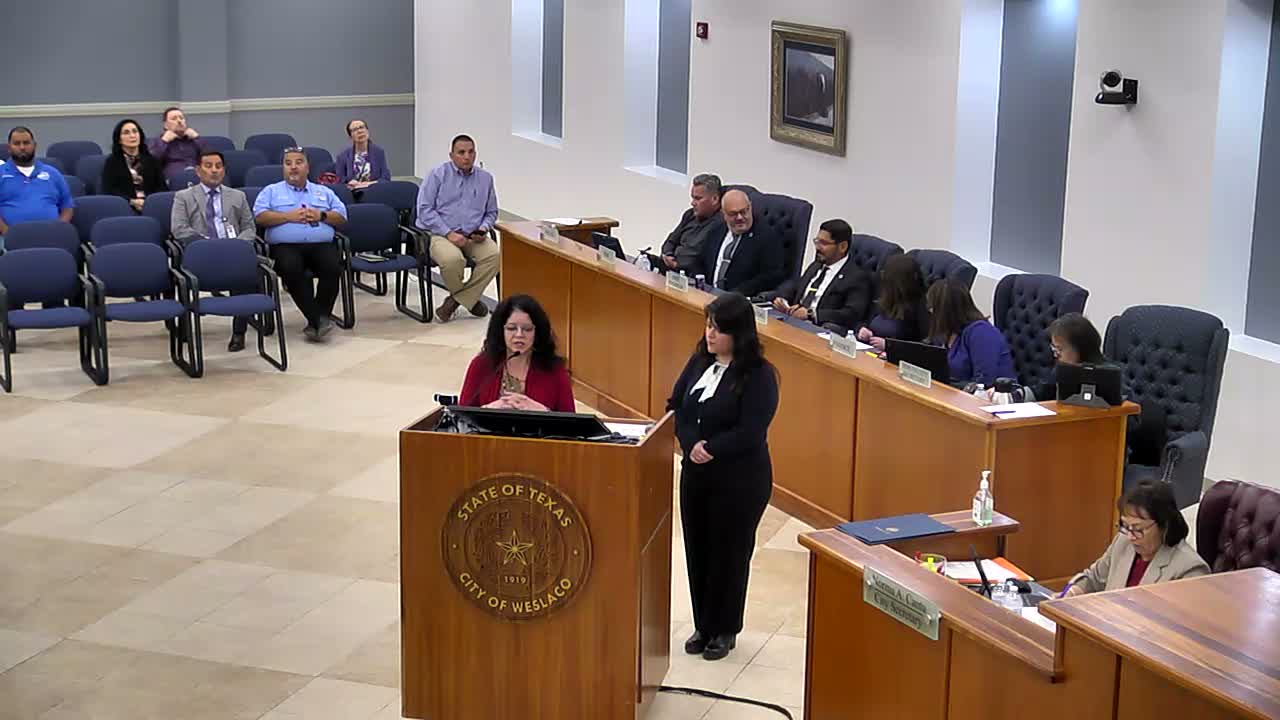
A representative of PAC, a nonprofit high‑volume spay‑and‑neuter clinic in South Texas, told the Weslaco City Commission at its workshop that the organization will set up temporary clinics in the city using funds from a state pilot grant and asked the city to partner on spay/neuter services, trap‑neuter‑return (TNR) and an ordinance to speed placement of young animals.
The presenter said PAC was awarded $500,000 as part of a two‑year state pilot program and that the group serves nine counties in the Rio Grande Valley. “We will be setting up here in your town,” the presenter said, adding that the program prioritizes city animals and trains shelter staff to perform high volumes of surgeries.
The presenter urged the commission to approve a partnership with PAC, implement a city‑supported TNR program for community cats and adopt an ordinance making puppies and kittens under four months immediate property of the city to facilitate rapid rescue and placement. She said these measures would reduce intake, lower euthanasia and save money: the presentation estimated current cat euthanasia costs at about $56,000 per year and contrasted that with a lower per‑animal cost under mass spay/neuter operations.
Commissioners and staff responded positively. One commissioner praised the city’s animal control director and encouraged coordination with regional veterinary training programs; another asked staff to explore how grant funds and local facilities could be used to host recurring clinics. The presenter said PAC recently performed 931 surgeries in a month and that PAC’s teams performed 67 surgeries the day of the workshop during travel operations.
The presenter emphasized outreach and education, saying her group conducts door‑to‑door outreach in underserved areas and partners with local schools and rescues to improve live outcomes. She said the proposed local partnership would initially run temporary clinics while the organization evaluates the possibility of a permanent facility.
Next steps: commissioners thanked the presenter and agreed to continue coordination with staff to explore facility options and grant logistics. The commission did not take a formal vote on PAC’s request during the workshop; staff and commissioners signaled support and requested follow‑up on logistics, contract terms and the grant timetable.