Get Full Government Meeting Transcripts, Videos, & Alerts Forever!
Get email alerts on the Work Schedule Retention topic
No spam. Unsubscribe anytime.
Firefighters propose 48/96 schedule pilot; commission asks staff to verify numbers
Summary
A firefighter presented a 48/96 (48 hours on, 96 off) work‑schedule pilot to reduce fatigue and improve retention; commissioners asked for finance and staffing analyses and agreed to a subcommittee to review implementation and impacts.
Firefighters presented a proposal to trial a 48/96 shift schedule and commissioners directed staff to verify the numbers and form a subcommittee to study operational impacts.
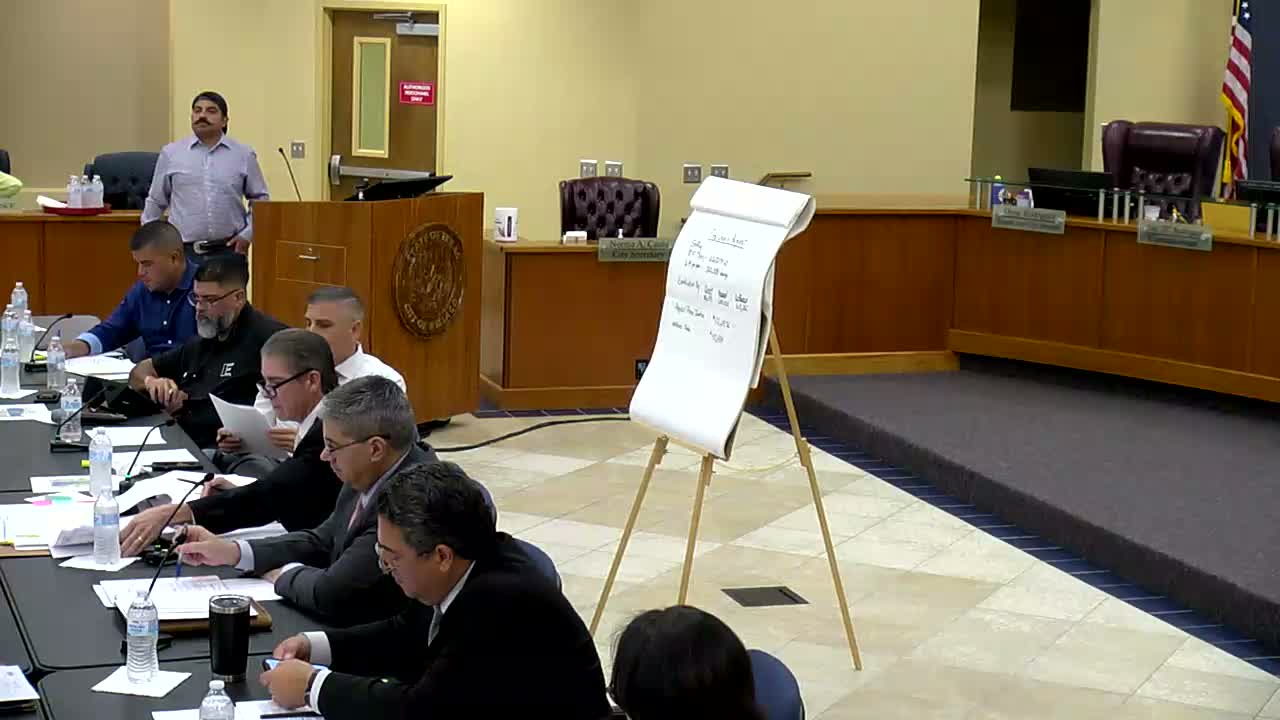
Firefighter Juan Marayan gave a detailed presentation on the proposed 48/96 schedule — 48 hours on duty followed by 96 hours off — and recommended a six‑month pilot to measure fatigue, overtime, morale and retention. He said departments in the region, including Palm View and Alton, had run similar trials and that most participants chose to keep the new schedule after a trial. “Firefighters work 48 hours on duty followed by 96 hours off duty,” Marayan said during his presentation, describing benefits including longer recovery windows, fewer shift turnovers and potential overtime reductions.
Marayan said his informal in‑house survey found 46 of 64 suppression firefighters favored the change; he proposed tracking metrics such as sick‑call rates, overtime usage, morale and family feedback during a pilot and allowing an opt‑out or revote after the evaluation. Supporters argued the schedule could reduce burnout and improve retention, while staff and commissioners raised operational questions about EMS alertness during 48‑hour tours, how callbacks and staffing minimums would be handled, and which contract articles would need modification.
Commissioners asked finance and the fire chief to run the numbers and identify affected contract language. Several commissioners recommended creating a small subcommittee of elected members and staff to review the verified data and report back at a subsequent CBA session. A tentative plan discussed in the meeting called for staff to run the numbers, hold a subcommittee meeting the following week to vet details and return a recommendation to the full negotiating table; commissioners also mentioned a tentative CBA meeting date of Sept. 4.
No pilot was formally approved during the session; the next steps are data verification by staff and a subcommittee review prior to any vote or CBA language change.