Get Full Government Meeting Transcripts, Videos, & Alerts Forever!
Get email alerts on the Utilities Fees topic
No spam. Unsubscribe anytime.
Weslaco staff propose raising septic discharge fee from $35 flat to $60 per 1,000 gallons
Summary
City utilities staff proposed replacing a flat $35 per-load septic discharge fee (in effect since 1994) with a volume-based $60 per 1,000-gallon rate and offered a six-month pilot that would add hauler registration, manifest tracking and occasional waste-quality testing.
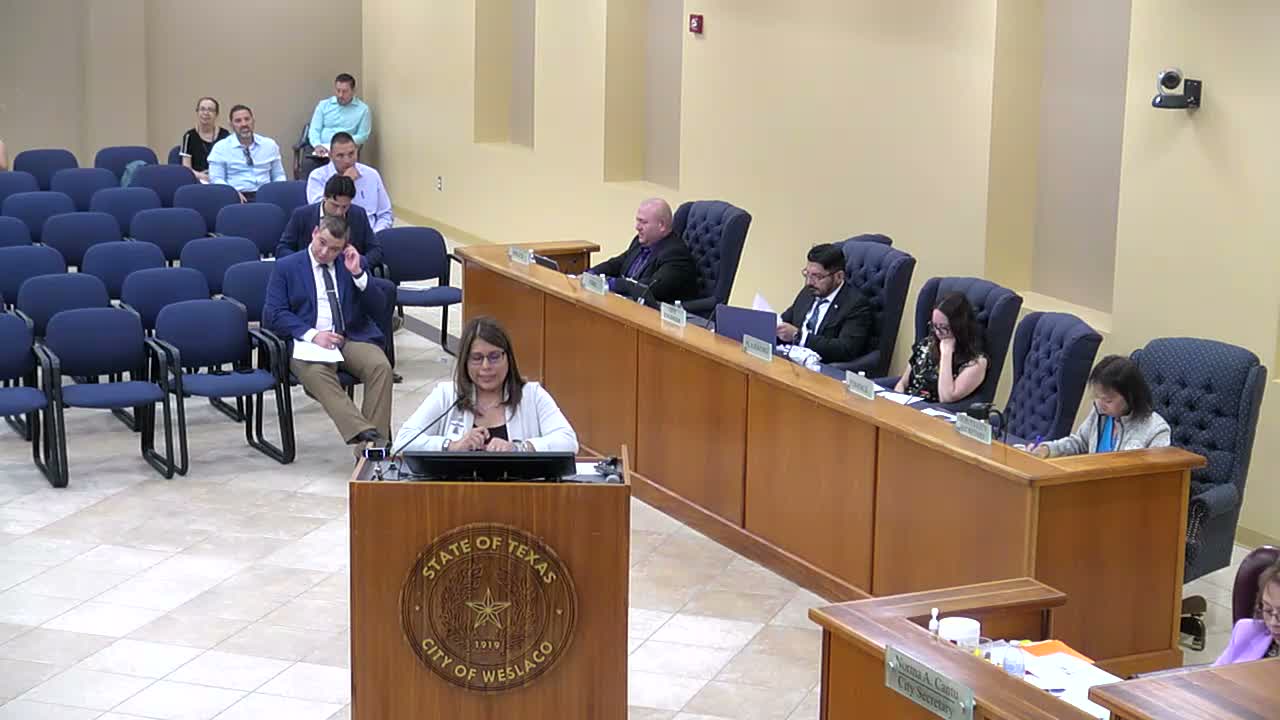
Rosie, a city utilities staff member, told the Weslaco City Commission on June 17 that the current flat septic-tank discharge fee — $35 per load since March 1994 — "no longer reflects the true cost of receiving and treating high-strength waste." She recommended a volume-based rate of $60 per 1,000 gallons.
Rosie said high-strength septic waste can be up to 10 times more concentrated than typical household sewage and imposes greater treatment and operational costs on regional treatment infrastructure. She said staff worked with InfraMark and South Texas Brightwater Solutions on a regional-rate review and recommended the $60-per-1,000-gallon volume rate to better align charges with treatment impacts.
Rosie also proposed an optional six-month pilot that would test operational procedures such as hauler registration, manifest tracking and occasional waste-quality testing. "Participation in this pilot would be voluntary and dependent on the commission's decision," Rosie said.
Commissioners asked how many haulers currently use the facility; staff said they currently have one active hauler that manifests discharges to InfraMark and that manifests are forwarded to finance monthly.
Staff said the March 1994 ordinance set the $35 flat rate and that the workshop presentation was to gather direction; an ordinance with a formal rate would return to the commission for approval if they direct staff to proceed.
What happens next: staff will bring an ordinance and implementation plan back to the commission if the commission directs them to pursue a rate change following the pilot and further review.