Get Full Government Meeting Transcripts, Videos, & Alerts Forever!
Get email alerts on the Property Code Enforcement topic
No spam. Unsubscribe anytime.
Weslaco staff outline demolition process, urge 30‑day notices as safety, tax issues mount
Summary
At a July 1 workshop, city staff reviewed 12 unoccupied or dilapidated properties slated for demo, described a year‑long legal process and liens handled by tax-collection firm Lineberger, and recommended a 30‑day notice window; commissioners raised public-safety and historic‑downtown concerns.
At a July 1 City Commission workshop in Weslaco, code‑enforcement staff presented a slate of properties the city is pursuing for demolition or further enforcement, explaining the notice, title and lien process and emphasizing public‑safety risks at abandoned buildings.
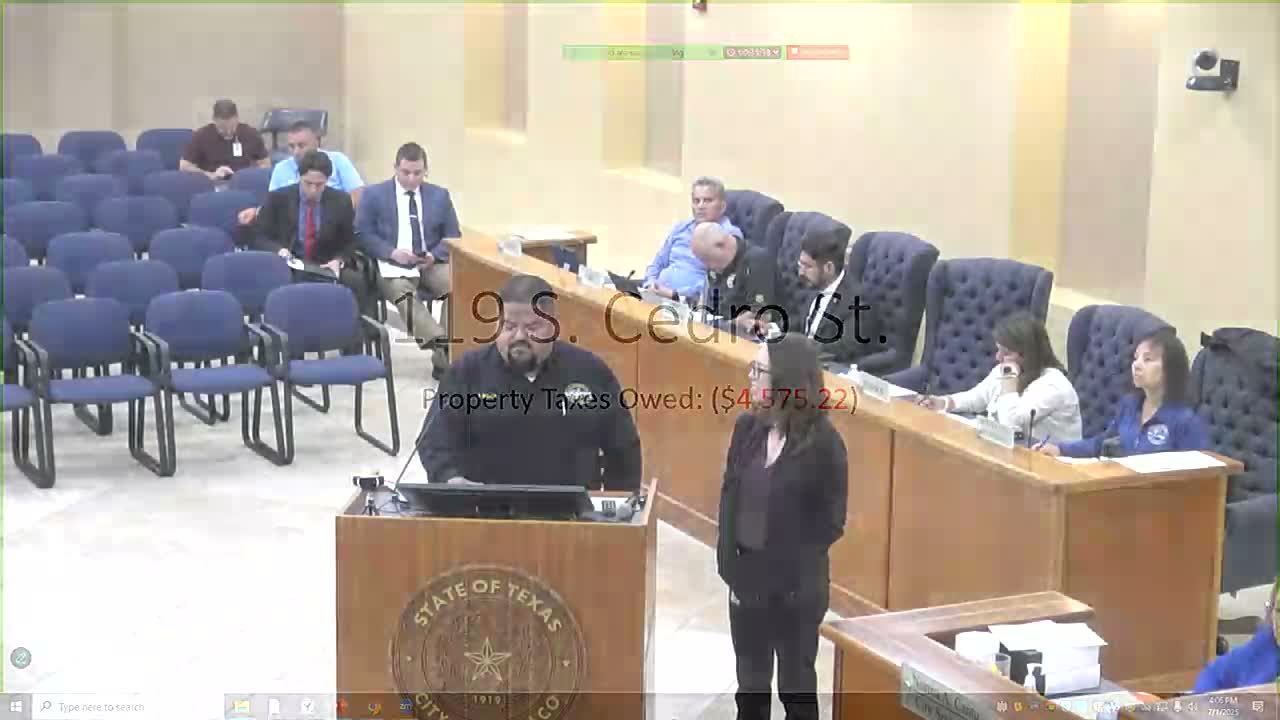
The presentation—opened by the city’s code presenter—listed a dozen properties under active review, and staff said the entire code‑enforcement to demolition track typically takes about a year to complete. "After we tear down the home, we'll send a bill to the owner. The owner doesn't pay. We put a lien on the property," said Rebecca (Presenter), describing the post‑demolition billing and the tax‑collection firm’s role in auctioning liens.
Why it matters: commissioners flagged falling property maintenance, squatters and violent or criminal activity at abandoned houses as immediate public‑safety risks that can endanger neighbors and first responders. The commission discussed property‑tax arrearages as part of the case histories—presenters noted individual balances (for example, roughly $4,575 on one property and about $23,206 on another) and said some owners had already demolished structures after receiving notices.
Staff said the legal process includes certified notices, newspaper publication and title searches; once the city demolishes a structure it files a lien, and the contracted tax‑collection firm (Lineberger) pursues sales or auctions. "It takes us about a year to go through the process," Rebecca said, describing the steps from identification to final sale. Staff also noted that demolition does not automatically transfer title to the city.
The Board of Adjustments (BOA) had recommended six‑month extensions for four properties, but administration urged commissioners that the minimum statutory notice is 30 days and that staff’s recommendation was to proceed with 30 days if property owners do not correct conditions. Several commissioners pressed for shorter timelines where structures posed imminent risk—one commissioner described a property that is visibly leaning and urged an expedited response because of nearby children.
Commissioners and the police and fire chief described hazards encountered inside abandoned houses—rusted nails, structural collapse risk, evidence of drug use and frequent squatting—which, they said, create liabilities and increase danger for both neighbors and responders.
What happens next: the commission will consider staff recommendations when the demolition item returns to the full agenda; staff said they will follow up on tax‑sale timing with the tax‑collection contractor and bring additional details on properties for which BOA recommended extensions.
Authorities and procedure referenced in the discussion include notices required by the city process and BOA recommendations on extensions; staff emphasized commissioners may accept or decline BOA’s recommendations before ordering demolition.