Get Full Government Meeting Transcripts, Videos, & Alerts Forever!
Get email alerts on the Housing Policy topic
No spam. Unsubscribe anytime.
Council weighs Neighborhood Empowerment Zone policy that would waive fees and allow lien releases for qualified rehab
Summary
Council discussed a proposed citywide Neighborhood Empowerment Zone policy that would allow targeted zones and modest incentives — primarily permit fee waivers and lien releases for projects meeting a 20% investment threshold — and asked staff to clarify eligibility (exterior/aesthetic improvements, lien mechanics) and return with revised language for council consideration.
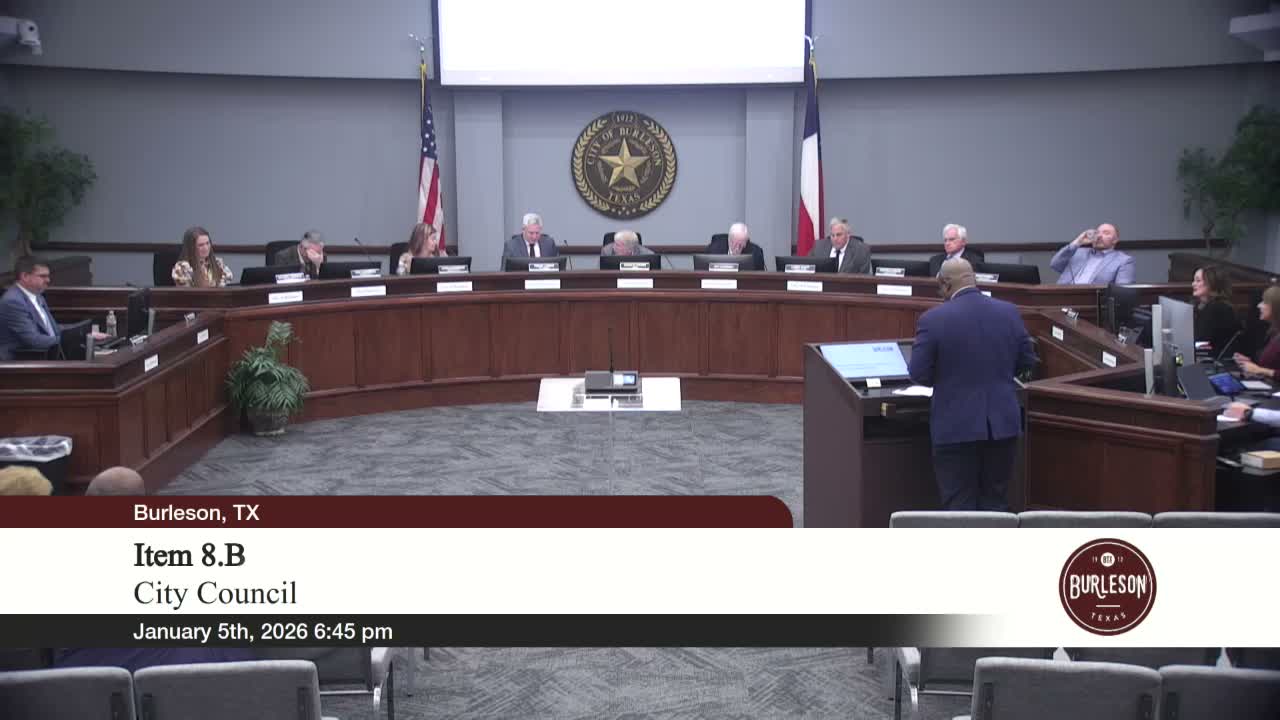
Tony McElwain, director of development services, briefed the council on Jan. 5 about a proposed Neighborhood Empowerment Zone (NEZ) policy using Chapter 3.78 of the local government code as the statutory framework. McElwain said the policy would be a citywide enabling document: the council would later designate specific NEZ target areas and could add incentives as allowed by state rules.
Under the policy presented, eligible projects would need to demonstrate a minimum 20% investment based on appraisal‑district valuation to qualify for permit‑fee waivers and, in some cases, release of liens associated with the property. McElwain emphasized that lien release authority would apply only in conjunction with new construction or qualifying rehabilitation within a target area and that staff wants to clarify the packet’s current run‑on language before finalizing the ordinance.
Council members asked a series of clarifying questions: whether eligible rehabilitation must include visible exterior improvements that benefit the neighborhood, how insurance payments versus out‑of‑pocket costs would be counted toward the 20% threshold, and whether the council should set the initial NEZ term at 10 years or a shorter period such as five years. McElwain explained that the city’s proposal focused on fee waivers and lien releases (a modest fiscal impact) rather than a matching grant or tax‑abatement program, and that tax abatements remain an option for later consideration.
Members also raised operational questions about lien mechanics and title work; staff said they would research typical lien types and refine policy language to address appeals, verification of project costs and exterior‑improvement requirements. Several council members suggested requiring that qualifying projects include an exterior or aesthetic component to ensure neighborhood benefit; others urged flexibility to allow structural improvements that extend housing life.
Council did not adopt the policy at the Jan. 5 meeting. Direction to staff included clarifying the lien‑release language, specifying how improvements will be measured toward the 20% threshold, and returning the revised policy to council for consideration (staff suggested additional outreach and a public hearing process for any NEZ designation).