Get Full Government Meeting Transcripts, Videos, & Alerts Forever!
Get email alerts on the Vaccination Policy topic
No spam. Unsubscribe anytime.
Hundreds testify against bills that would give Connecticut DPH commissioner unilateral vaccine authority
Summary
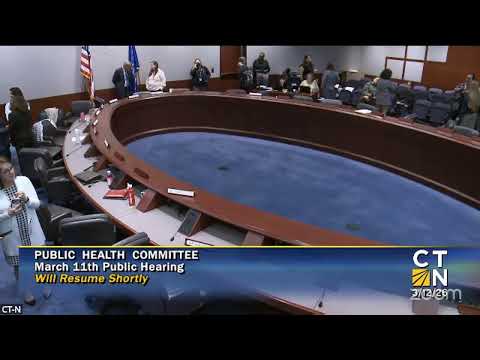
At a lengthy Public Health Committee hearing in Hartford, hundreds of residents, parents and health workers testified largely in opposition to SB 450 and HB 5044, arguing the bills would remove oversight of vaccine scheduling, concentrate power in one unelected official and strip religious‑exemption protections.
Hundreds of residents and several health professionals testified late into the night before the Public Health Committee in Hartford, urging lawmakers to reject SB 450 and HB 5044 on the grounds that the measures would shift vaccine‑policy authority to a single, unelected official and remove longstanding religious‑exemption protections.
Supporters and opponents alike described emotionally charged personal experiences and competing views of public health. "Removing a bipartisan regulatory review committee and leaving the power to change the vaccine schedule in the hands of 1 unelected official is not the action of a democratic government," said Kristen Figby, a West Hartford resident who testified against the bills. Proponents such as registered nurse and Yale MPH student Emily Goins framed the bills differently: "Vaccines save lives," Goins said, describing 17 years of clinical experience and the death of her father from COVID.
Why it matters: The bills would centralize the authority to establish or revise an immunization standard in the Department of Public Health commissioner and, critics say, bypass the regulatory review process that allows public comment and legislative oversight. Opponents also said SB 450's changes to the Religious Freedom Restoration Act would remove court and statutory protections that currently allow people to claim religious exemptions.
Opponents' concerns ranged from broad constitutional arguments to practical consequences. Several nurses, physician assistants and other clinicians warned of workforce impacts if religious protections are narrowed. "If SB 450 passes and RFRA is removed, I may be forced to make an impossible choice to violate my beliefs or leave the profession that I have dedicated over 2 decades to," said Christine Roland, a physician assistant who testified she had received religious exemptions in the past.
Many parents and individuals described adverse reactions they attribute to vaccines, difficulties obtaining medical exemptions in some cases, or fear that a new adult vaccine schedule could affect employment, licensure or access to services. Samantha and other speakers urged the committee to preserve the regulatory review committee or otherwise maintain public oversight.
Supporters of the bills framed them as a way to modernize and clarify immunization standards and to align state practice with clinical guidance. Goins said the bills reference professional organizations such as the American Academy of Pediatrics and American College of Obstetricians and Gynecologists when giving the commissioner discretion to consult recognized bodies.
What happens next: The committee did not vote on either bill during the session recorded in the transcript. Lawmakers and committee staff debated hearing logistics and whether to extend testimony beyond the scheduled end time; chairs ultimately declared the official hearing closed. Further committee action, if any, was not recorded in the transcript.