Get Full Government Meeting Transcripts, Videos, & Alerts Forever!
Get email alerts on the Grant Programs topic
No spam. Unsubscribe anytime.
Miss Walker leads Grandview Heights committee in review of small grant program
Summary
An ad hoc Grandview Heights committee reviewed proposed edits to the city's small grants program April 27, debating whether projects tied to religious organizations should be eligible, adopting a scoring rubric, proposing a review committee, and setting application deadlines for Jan. 1'Oct. 31.
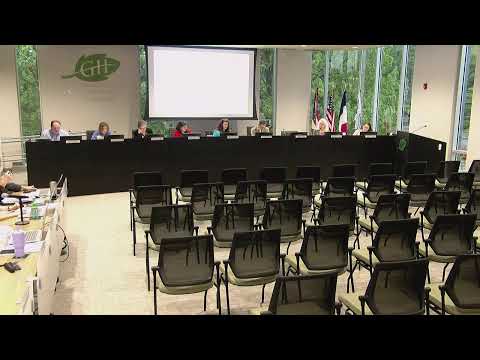
Miss Walker, chair of the ad hoc grant committee, opened the April 27 meeting to review proposed revisions to Grandview Heights' small grants program and distributed the background materials, a scoring rubric and the application form. "I crossed out the line and highlighted to be or to be nominated, because previously it had said potential recipients may apply or be nominated," she said, arguing applicants should apply and be accountable for funds.
The committee's discussion centered on eligibility, process and post-award reporting. Miss Walker proposed language to allow a local religious organization's project to be eligible only if "the project program offers secular based services to community members outside of the religious organization's membership, and the organization has a history of serving City Of Grandview residents." Council Member Smith said she preferred keeping the prior prohibition on religious organizations, saying she was "more comfortable with just keeping it at what we had before, with no religious organizations." The committee discussed compromise language that would focus eligibility on the project's secular scope and demonstrated service to Grandview Heights residents.
Members also debated geographic eligibility. One committee member noted nearby nonprofits that serve city residents but lack a local office, citing the Mid Ohio Food Bank as an example; the group favored defining eligibility by service area or established record in the community rather than strictly requiring a brick-and-mortar presence.
On process, Miss Walker proposed accepting applications on a rolling basis "January 1 through October 31 annually" and creating a review committee composed of the City Administrator, the City Finance Director and a rotating council member to score applications against a rubric and forward recommendations to council. Miss Walker said the rubric ties directly to the selection criteria: "high measurable benefit would be 13 to 15 points" within categories that sum to a possible 100 points.
Committee members discussed the trade-offs of a pre-council scoring step: supporters said it would let council members see reviews and ask questions before applicants appear; others worried it could add bureaucracy. Miss Walker said the committee would make recommendations to council rather than take final action.
The group considered follow-up reporting and thresholds for post-award accountability. One member suggested streamlined reporting for smaller awards and more detailed reports above set thresholds (examples discussed included $500 and $1,000). Members observed that typical awards run roughly $500 to $1,500 and that occasional awards have been as high as $2,000 when funds permitted.
The committee aimed to meet again before the May 11 council meeting to finalize language and return recommended edits to council. With no further business, Miss Walker moved to adjourn; the motion was seconded and the committee adjourned.
The committee did not take formal votes on program changes at the meeting; it agreed to return at a follow-up meeting with refined language and a redline of proposed edits for council consideration.