Get Full Government Meeting Transcripts, Videos, & Alerts Forever!
Get email alerts on the Conservation Easements topic
No spam. Unsubscribe anytime.
Committee hears technical edits, safeguards for Guam conservation‑easement bill
Summary
Lawmakers and agencies supported Bill 2‑44‑38 to create a Guam conservation‑easement framework but urged amendments: integrate with the Guam Forest System Plan, clarify definitions and enforcement hierarchy, require recording and baseline management plans, and add stewardship funding and transfer rules.
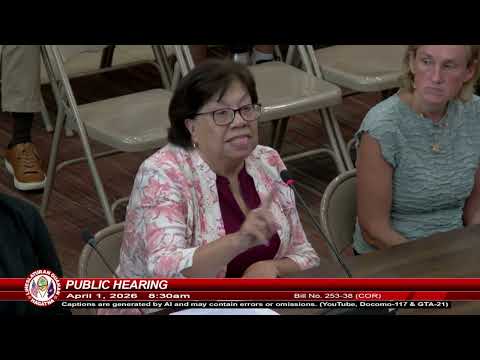
On April 1, the Committee on Land, Environment, Housing, Agriculture, Parks, and Infrastructure took testimony on Bill 2‑44‑38, which would establish a Guam‑specific conservation‑easement act to protect ecologically and culturally significant lands while allowing landowners to retain title.
The Guam Department of Agriculture supported the bill’s intent but offered a lengthy technical review, asking the legislature to amend the draft so easements are legally sound and administratively workable. Among DOAG’s top recommendations were to (1) explicitly integrate easements into the Guam Forest System Plan inventory and provide unified tracking and mapping protocols; (2) replace the word "private" so the act can apply to any real property if appropriate; (3) require baseline documentation and management plans for each easement; (4) clarify third‑party enforcement hierarchies so that the easement holder retains primary enforcement rights; (5) add mandatory recording requirements with Department of Land Management; and (6) create safeguards around judicial modification or termination so easements created as permit conditions are not undercut without replacement conservation values.
"Conservation easements are a proven, flexible, and voluntary tool," a University of Guam expert said. Witnesses recommended that the act specify minimum standards for qualified nonprofit easement holders, require annual monitoring (DOAG recommended at least one inspection per year), and include stewardship endowments or funding mechanisms so holders can monitor and enforce protections in perpetuity.
Lawmakers raised practical questions: who determines whether a parcel meets "conservation values," which local government entities are qualified to hold easements, and whether government parcels should be eligible. DOAG and forestry staff recommended that definitions and selection criteria be established up front and that Department of Agriculture and Forestry coordinate with advisory committees and federal partners to set technical standards.
Speakers also cautioned against unintended outcomes. Some committee members asked for explicit language to prevent easements from being used as undisclosed federal or Department of Defense mitigation without transparency and public review. The Guahan Sentinel Landscape Program and forestry staff suggested naming potential partner agencies (for example, USDA or USFWS) in the implementing guidance to ensure clarity about funding and program alignment.
There was no vote on the measure. The bill’s author thanked witnesses and said she will work with agencies on a redrafted bill and regulatory approach before the committee prepares its report.