Get Full Government Meeting Transcripts, Videos, & Alerts Forever!
Get email alerts on the School Finance topic
No spam. Unsubscribe anytime.
Poudre School District confronts uncertain state forecasts as enrollment declines drive local budget planning
Summary
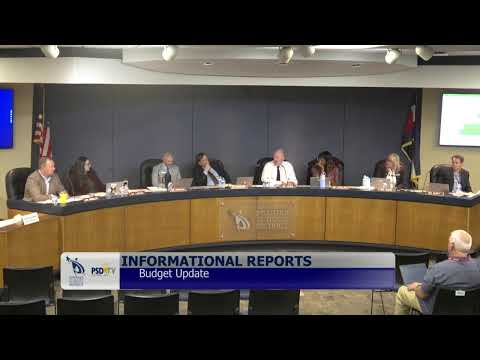
Budget director Brian Gustafson told the board March 24 that differing March forecasts from the Office of State Budget and Planning and Legislative Council Staff complicate district planning; district officials stressed a declining enrollment projection of about 654 students and outlined next steps for preliminary budgets and school finance runs.
Poudre School District budget staff told the board March 24 that state forecasting differences and local enrollment declines will shape the district's fiscal‑year 2027 planning.
Brian Gustafson, the district's budget director, said two independent March forecasts diverge widely: the Office of State Budget and Planning (OSPB) projected a modest surplus at the state level, while Legislative Council Staff presented a substantially larger deficit. "We have two forecasts looking at the same fiscal situation that are vastly different," Gustafson said, summarizing numbers presented in Department of Education material.
Gustafson and CFO Dave Montoya outlined how the governor's budget request tied to the OSPB forecast would increase K‑12 total program funding by roughly $206.7 million under an assumed 2.3–2.6% inflation range and continue the School Finance Act phase‑in. By contrast, Legislative Council Staff estimates were substantially less favorable, a difference that bedevils districts trying to finalize staffing and allocations.
"Regardless of the revenue situation, we're focused on aligning the budget in a period of declining enrollment," Gustafson said. The district projects a net enrollment decline of approximately 654 students for next year and noted roughly 10,000 open seats in district facilities — both factors forcing local adjustments independent of state outcomes.
Gustafson explained next steps and deadlines: school finance runs from the Colorado Department of Education (CDE) are expected to clarify district‑level impacts; the district plans to present a round‑two fiscal impact update April 14, submit a preliminary budget April 28 (not balanced), and present a proposed budget in May for adoption in June. Directors asked for scenario planning and ranges for options tied to differing state outcomes; one director noted April 14 is also the timeline that supports required RIF notifications.
Montoya and Gustafson flagged several state policy levers under discussion that could affect the long‑term outlook, including proposed changes to specific ownership tax treatment, reserve draws, and one‑time redirections of other state funds. District leaders emphasized the uncertainty in those state actions and said they are preparing both worst‑case scenarios and contingency plans.
The board did not take action on budgetary changes at the March 24 meeting; staff said further detail will follow as CDE school‑finance runs and legislative actions become clearer.