Get Full Government Meeting Transcripts, Videos, & Alerts Forever!
Get email alerts on the Open Container Pilot topic
No spam. Unsubscribe anytime.
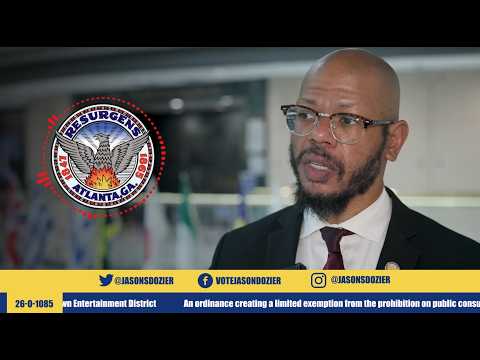
Lawmaker outlines pilot open-container district for Atlanta’s South Downtown
Summary
A lawmaker said legislation would establish a temporary open-container overlay district in South Downtown running April 15 through Jan. 31 to allow public drinking in defined areas as a pilot to study impacts on public safety and small businesses; enforcement details and any formal vote were not specified in the transcript.
A lawmaker said legislation would create a narrowly defined pilot open-container overlay district in South Downtown, Atlanta, beginning April 15 and ending Jan. 31, intended to let city officials collect data on public-safety and business impacts.
The lawmaker described the proposal as a limited experiment aimed at helping commercial corridors recover foot traffic after the pandemic and said other corridors—Edgewood Avenue, the BeltLine and parts of Midtown—could be considered later if the pilot is successful. "This creates an opportunity for the other commercial districts to really take advantage of the fact ... they wanna see foot traffic," the lawmaker said.
The speaker said the pilot was timed to include major events so the city can compare operations before, during and after them. "This begins on April 15 and it sunsets on January 31," the lawmaker said, noting the window covers the period around the World Cup and other high-attendance dates. The lawmaker listed Labor Day weekend, a Sugar Bowl/college football semifinal hosted in Atlanta and New Year's Eve as events that fall within the pilot period.
On enforcement and legal effect, the lawmaker characterized the change as a limited decriminalization within the pilot area. "We're essentially decriminalizing people drinking in public in a way that we have never done before as a city," the lawmaker said. The transcript does not specify how enforcement would be implemented, how existing ordinances would be altered, or what penalties (if any) would be suspended.
The lawmaker also said public-safety officials and participants in what the transcript identified as the "ATAG, liquor license reevaluation process" preferred a cautious approach; the speaker framed the pilot timeline as a compromise to allow data collection and review. The transcript does not identify ATAG's full name or provide a recorded vote or ordinance number in the excerpt provided.
If the pilot yields favorable results, the speaker said they would like to consider making changes permanent, though they acknowledged public-safety stakeholders wanted a slow, measured process. "I would love to see something permanent, but I also recognize that our public safety officials ... wanna take things a little slow," the lawmaker said.
Next steps were described only in general terms in the transcript: the lawmaker said the pilot will generate information on APD operations and commercial activity that officials will review; no formal adoption or vote appears in the provided segments.