Get Full Government Meeting Transcripts, Videos, & Alerts Forever!
Get email alerts on the Board Of Peace Trademark topic
No spam. Unsubscribe anytime.
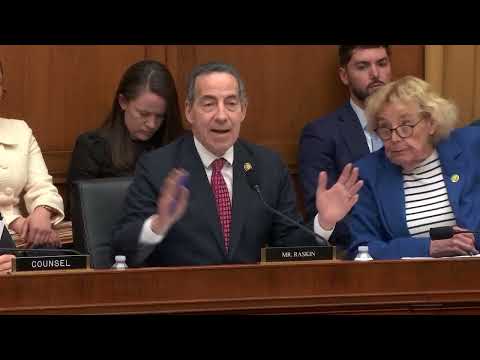
Committee member says USPTO registered Trump's "Board of Peace" trademark, raising emoluments and impartiality concerns
Summary
A House committee member accused the U.S. Patent and Trademark Office of filing trademarks for former President Trump's private "Board of Peace," arguing the move could signal politicization of the agency, trigger litigation and raise possible emoluments-clause issues. The committee asked Director Squires for an explanation.
A House committee member told USPTO Director Squires on the record that the agency's decision to file trademark applications for former President Trump's self-described "Board of Peace" may have politicized the office and could violate trademark law and the Constitution.
"Thank you, director Esquires, for joining us today," the committee member said, then accused the director and the president of having "injected partisan politics into the work of the PTO" and of using the agency to file applications "on behalf of Donald Trump's ... private multibillion dollar global project called the Board of Peace." The member said the USPTO "personally filed the trademark applications," allowing the agency to "stand in as a straw trademark holder."
The member framed the concern as both legal and ethical. He said trademark law dates to the late 19th century and that the modern Lanham Act (1946) "makes clear it only protects trademarks used in interstate commerce." Citing the statute as spoken, he added that "Section 10 52 b specifically forbids the registration of any insignia of The United States or any state or municipality or any foreign nation or any other, governmental body," arguing that by filing a trademark the agency is effectively treating the Board of Peace as a commercial enterprise rather than a governmental body.
The member raised additional allegations about the Board's funding and structure, saying the president 'has promised billions of dollars from the taxpayers'and "secured billions of dollars from mostly corrupt foreign governments including Saudi Arabia, Kazakhstan, Azerbaijan, United Arab Emirates, Morocco, Bahrain, Qatar, Uzbekistan, and Kuwait." He urged the agency to explain its rationale and warned that "this decision will get challenged, and there will be litigation over the mark."
Beyond the trademark filing itself, the committee member pressed a broader point about the agency's impartiality. He said prior USPTO directors kept politics out of the office so applicants could trust a neutral system, but that recent actions 'including moves "to strip trademark examiners of any right to collective bargaining," firing oversight board members and resisting congressional information requests 'have eroded that trust. "When people lose faith in the fairness and objectivity of our system, it begins to fall apart," he said.
The committee member asked Director Squires to explain why the agency had registered the mark, how it would adjudicate disputes between the Board of Peace and earlier users of "peace" in organizational names, and what steps the USPTO would take to restore professional nonpartisan reputation.
The hearing transcript records this line of questioning and the committee member's allegations; the record does not show a response from Director Squires in the provided segments, nor does it record any formal vote or agency finding on the matter. The committee member closed by reiterating that if the agency acted as a favor to the president "then that's a serious problem," and yielded back to the chair.