Get Full Government Meeting Transcripts, Videos, & Alerts Forever!
Get email alerts on the Animal Breeding topic
No spam. Unsubscribe anytime.
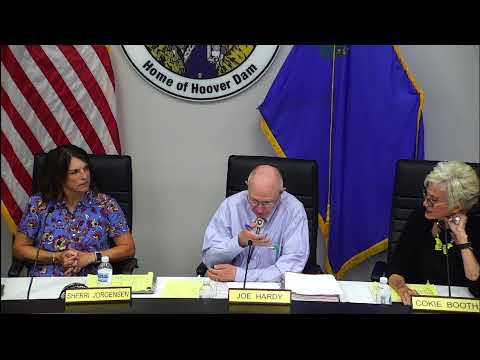
Boulder City Council directs staff to draft strict breeder rules, signals ban on hobby breeding
Summary
After months of public comment, council directed staff to return with a draft ordinance that would regulate commercial breeding while prohibiting hobby breeding, proposing limits such as a three‑animal breeding cap, minimum breeding age of two years, one litter every two years, reporting and inspection requirements, and civil fines.
Mayor Joe Hardy and the city attorney framed item 15 around a recent opinion from the Nevada attorney general’s office that state law requires local regulation of breeding and generally preempts a municipal ban on commercial breeding. City Attorney (speaker 7) told council that the AG’s opinion ‘‘concurred with my office’s interpretation that NRS 5 74 3 5 3 does require the city of Boulder City to adopt an ordinance to regulate animal breeding and presents preempts the city's ability to prohibit commercial breeding,’’ but that ‘‘the city is allowed to prohibit breeding as a hobby, which means not for any monetary compensation.’’
Council spent more than an hour hearing detailed public testimony and staff recommendations before coalescing around a set of substantive directions for a draft ordinance to return for formal consideration. The draft direction given to staff included: a cap on breeding animals set at three dogs and cats total per household (combined), a minimum age of two years before an animal may be bred, a limit of one litter every two years per female, minimum indoor and outdoor space standards for animals kept for breeding (staff proposed 40 square feet per breeding animal indoors and 1,000 square feet of usable outdoor space), annual inspections and an annual reporting requirement tied to permit renewal, a permit fee structure (staff proposed a $250 base fee plus ‘‘actual costs’’ for inspections), and staged civil fines for violations. Staff and council discussed making hobby breeding—noncommercial, unpaid breeding—prohibited outright under the municipal code.
Public commenters were sharply divided. Several residents urged strict controls or an outright ban on backyard breeding, saying shelters are full and breeders contribute to overpopulation. Bridal Delormier, who testified during public comment, said, "I'm adamantly against dog breeding in Boulder City," and asked for high permit fees and strict penalties. Other community members urged caution, noting long‑standing off‑leash customs in parks and asking the city to rely on better data before restricting residents’ activities. Animal control staff told council the shelter has received surrendered litters this year and recommended microchipping and reporting requirements to link animals returned to breeders.
Council members debated zoning limits and enforcement mechanics. Some members argued zoning limits such as restricting breeding permits to the city’s largest lots (R‑120/R‑180 zones) would keep commercial breeders out of compact neighborhoods; others said lot zoning can be arbitrary and preferred objective space and inspection standards and the ability to revoke permits for violations. The city’s animal control officer (speaker 33) and city attorney said annual inspections and reporting would be the primary enforcement tools; staff suggested permit fees could be defined as the staff hourly cost for inspections so the fee scales as needed.
The council did not adopt an ordinance at this meeting. Instead they directed staff to prepare a bill that reflects the discussed elements—permit, inspection, reporting, minimum ages and spacing, the three‑animal breeding limit, one litter per two years, and prohibiting hobby breeding—and return with a finalized draft and recommended language for civil fines and any distance/separation or licensing limits. The city attorney said the draft ordinance would be brought back for formal action.
What happens next: staff will draft the ordinance language and return to council as a bill; any final ban or permit program will be adopted only after the council votes on that bill. The council emphasized the intent to write enforceable rules—inspections, microchipping and reporting—to hold breeders accountable while complying with state law.