Get Full Government Meeting Transcripts, Videos, & Alerts Forever!
Get email alerts on the Workforce Development topic
No spam. Unsubscribe anytime.
Capital Region and Green workforce boards outline consolidation plan to preserve local services and expand resources
Summary
Leaders from the Capital Region and Green workforce development boards presented a plan to consolidate administrative local workforce areas, saying the change would keep frontline services local while creating administrative efficiency and unlocking additional funds under state formulas.
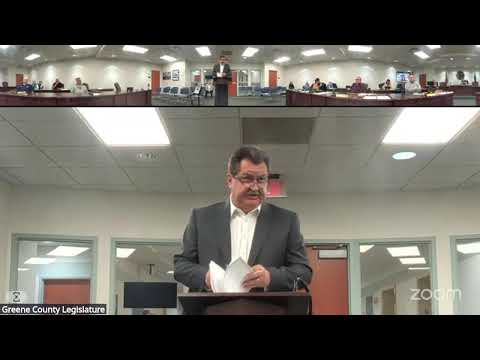
Amanda Parks, executive director of the Green Workforce Development Board, and Brian Williams, executive director of the Capital Region Workforce Development Board, asked the Greene County Economic Forum & Tourism Committee on Monday to support an administrative consolidation of local workforce areas intended to precede federal reauthorization and streamline services across neighboring counties.
Parks framed the proposal as a locally driven approach to an expected federal change. “The congressional act that funds our system is going through reauthorization,” she said, and local boards are “taking the initiative where we are, and be really the building blocks for that conversation in your state.” She said both workforce boards have voted to move forward and emphasized that “what this will do on the ground doesn't look different for a customer to pick up.”
Williams, representing the Capital Region board, said the two areas already function as one labor market in many respects and that consolidation would better align resources across county lines. “So we in Capital Region, you know, when we walked into this discussion two years ago now … it makes sense because we're one labor market in that effort,” he said. He added the move is intended to preserve local presence: the executive or an equivalent high-level administrator would remain based locally to maintain communication with county leaders.
Presenters described concrete program benefits: expanded outreach and marketing capacity, shared business‑services staffing, and larger grant and nonfederal funding opportunities driven by a bigger service area. Parks said the combined local area would become a five‑county area under the state's allocation formula and, based on state numbers, the Columbia–Greene area would receive more money in some program buckets under consolidation.
Committee members pressed on service continuity and local control. Presenters repeatedly said direct customer services—career-center assistance, training subsidies (including CDL and health-care training), childcare and transportation reimbursements—would continue locally. “If they can't get here, they're not gonna take advantage of the services that we offer them,” Parks said, explaining plans to provide staff at satellite locations and to partner with social services and libraries for outreach.
Presenters also described business-facing services: a business‑services director would canvas employers to identify hiring pain points and shape training and placement strategies. Williams said expanded marketing resources and shared staff would allow the system to scale outreach without diminishing local responsiveness.
The presentation concluded with an invitation to county leaders to participate in implementation planning and to support keeping key administrative positions and decision-making close to Columbia and Greene County. The boards asked the committee to endorse the consolidation approach as they continue to develop a local implementation template for the state.
Next steps: presenters said they will share additional implementation materials and outreach plans with committee members; no formal county action on consolidation was taken at the meeting.