Get Full Government Meeting Transcripts, Videos, & Alerts Forever!
Get email alerts on the Workplace Culture topic
No spam. Unsubscribe anytime.
District 21 accepts joint culture and climate recommendations after staff survey
Summary
A joint district‑DEA committee presented three co‑designed recommendations — scheduled non‑evaluative building support, a focused professional‑development roadmap using PLCs, and a formal internal transfer process — which the superintendent accepted for implementation and monitoring.
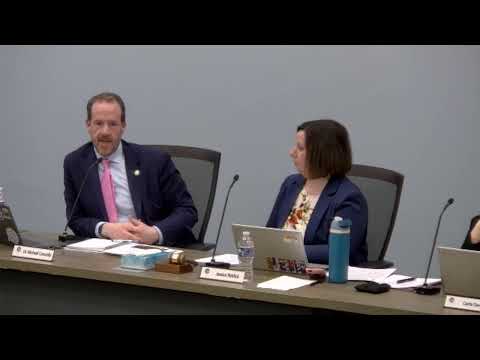
A joint committee of District 21 leaders and union representatives presented three co‑designed recommendations to address staff culture and climate and the board accepted the plan on Thursday.
Lewis Roberts, the district's executive director for human resources, and Rachel Cutro, a union co‑chair, said they built the proposals from Humanex survey data that reached about 80% of staff and from building‑level discussions. The committee’s three central recommendations are: schedule regular non‑evaluative building support and listening sessions to rebuild trust; co‑design a single professional‑development roadmap using existing Professional Learning Communities (PLCs) to reduce fragmented training; and create a formal internal transfer process with clear timelines to reduce ambiguity around staffing moves.
“We started by defining a healthy future state, then worked backwards to remove barriers,” Roberts said, describing the committee’s use of root‑cause analysis and storyboard work to identify systemic issues. The presenters said the recommendations were validated by staff feedback and outside research and included preliminary target improvements (for example, an estimated 5 percentage‑point improvement on several Humanex items and a 60% agree/strongly agree goal for one transfer‑process item if changes are successful).
Superintendent Dr. Connolly told the board she is accepting the recommendations and that implementation logistics — communication plans, staffing and further refinement with DEA and school improvement teams — will follow. “The work of logistics, implementation and communication will be ongoing and will involve a lot of people, not just this task force,” she said.
Board members pressed for follow‑up measures. One asked whether Humanex will be administered again this spring; committee presenters said a spring Humanex administration will proceed and that the district will combine results with Panorama (the state‑mandated culture and climate instrument) and qualitative evidence from building teams to track progress. The presenters emphasized that individual schools will develop local plans and that multiple data streams will inform monitoring.
The board’s acceptance sets the recommendations in motion; staff indicated further action plans, timelines and communications would be developed jointly with DEA and school leaders before district‑wide rollout.