Get AI Briefings, Transcripts & Alerts on Local & National Government Meetings — Forever.
Poets in Easthampton read Palestinian works, launch Peace Birds folding project and mutual-aid appeals
Loading...
Summary
A public panel in Easthampton opened with readings of Palestinian poetry, discussed using poems as tools for activism and community lobbying, debuted a 'poets' ceasefire' collage, and invited residents to contribute folded birds to a Peace Birds installation and to mutual-aid fundraising.
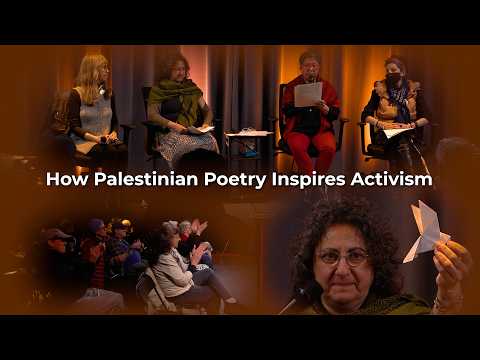
Carolyn Cushing, Easthampton’s poet laureate (2023–2025), opened a public panel on poetry and activism by saying the session would center Palestinian poets and their witness to violence, and by urging attendees "we haven't yet earned the right to despair because there is still one more action to take." The program combined readings with a hands-on origami "Peace Birds" project and calls for donations to mutual-aid efforts in Gaza.
The event, presented under the "We the Poets" grant, began with the panel reading "I Grant You Refuge" by Ibu Abu Nada (translation credited to Huda Fukruddin). Panelists read alternating stanzas and framed the poems as both testimony and inspiration. Carolyn Cushing told the audience she assembled lines from Palestinian poets into a mock "whereas/therefore be it resolved" ceasefire text to use in local advocacy and to encourage residents to press elected officials for a ceasefire.
Mona, a co-organizer of the Peace Birds project, described the installation of folded doves and cranes—"we've got probably 10,000 birds"—including an on-campus display at Frost Library, Amherst College, and invited attendees to write a line or image on paper during readings and then fold it into a bird. She led a step-by-step demonstration for a "dove" fold, describing the creases and a mindfulness practice around folding; participants were asked to drop finished birds in a basket for inclusion in the installation.
Panelist Jupang read poems from a play-in-progress, described the cross-cultural origins of the folding project (including Taiwan and Palestinian embroidery traditions), and asked the audience to consider donating to Yasser Abu Narayda, a person she said is living in Gaza and "in dire need," with PayPal details to be shared after the program. Rachel T. Ferret, a local writer and poet, read several newly written poems that framed ritual language and personal history as a means to demand justice and to support mutual-aid efforts.
The panel mixed artistic practice with civic action. Cushing described efforts to use poetry as advocacy—compiling packets of local poets' work to give to members of Congress and adapting lines from Palestinian poets into a local ceasefire-style resolution she has used in city council and community advocacy. She also named elected officials she had contacted, saying she had called Representative Richard Neal and worked through connections in Senator Ed Markey's office to keep the issue before staff.
Organizers provided practical follow-ups: flyers for mutual-aid groups (including local Food Not Bombs and a listed water distributor), PeaceBird kits for sale, and a weekly open folding session at Frost Library, Amherst College, Mondays from 4 to 6 p.m. The formal portion closed with a short poem by Lina Al Sharif; panelists encouraged attendees to stay for informal conversation, folding coaching and refreshments.
The panel combined cultural expression and explicit civic outreach: readings and personal testimony that framed contemporary Palestinian suffering as central to the poems, a physical community art installation intended to gather and display public wishes and remembrances, and invitations to sign or deliver adapted "poet resolutions" and to support mutual-aid fundraising. No formal votes or government actions were taken at the event; next steps described to the audience were the folding sessions and opportunities to connect with mutual-aid organizers after the panel.