Get Full Government Meeting Transcripts, Videos, & Alerts Forever!
Get email alerts on the Tif Finance topic
No spam. Unsubscribe anytime.
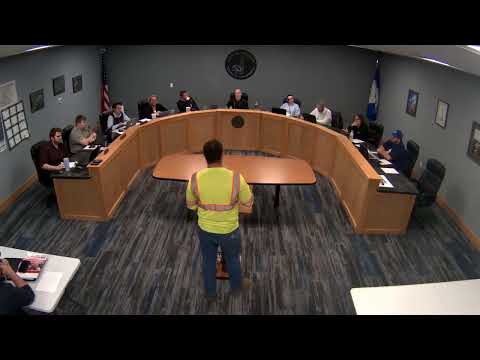
Kasson council establishes TIF district and authorizes contract for 4th Lane Flats
Summary
The Kasson City Council approved a tax‑increment financing (TIF) district and authorized the mayor and staff to sign a development contract with 504 Ventures LLC for a 39‑unit apartment project, with the city pledging up to 90% of incremental tax revenue toward $650,000 in eligible developer costs over up to 12 years.
Kasson City Council voted to establish a tax‑increment financing (TIF) district and authorized the mayor and staff to sign a development contract to support the proposed 39‑unit 4th Lane Flats project. The council adopted a resolution after a public hearing and a staff presentation by Mike Bubani.
Bubani told the council the housing TIF would require rental income compliance and include two tiers of income‑restricted units: 20% of units at 50% of area median income and 40% at 60% of area median income for rental units. He summarized the financing mechanics: "all we're doing is redirecting new property taxes that are being generated by development to assist that development that otherwise would not occur," he said, explaining how tax increments are isolated to a separate fund and used to help pay project costs.
The TIF plan document in the council packet shows a maximum projection of $2,173,000 in increment collections over a full 26‑year life and includes language authorizing bonds up to $1,320,000 (Bubani said the city had no intent to issue bonds). The staff estimate of potential developer payments over the full theoretical life was shown as $1,956,000 with a present value near $1,100,000; the development agreement before the council limits the city’s commitment to paying 90% of incoming tax increments only until the developer has received $650,000 plus 4% interest or until 12 annual collections have been paid, whichever comes first.
Bubani described the approach as a "pay as you go" structure with no contingent city liability to cover shortfalls: if incremental revenue falls short, payments are not made and the developer bears the risk. Council members pressed on compliance and verification; Bubani said certification of income compliance would be required annually and staff would request copies of paid invoices to verify eligible costs.
After brief staff discussion about construction‑related concerns (parking and pedestrian safety near nearby schools), the council approved a resolution to establish the TIF district and then authorized the mayor and staff to sign the development contract and related documents. The motions were moved and seconded (mover recorded as Ryan; second recorded as Paul in the transcript) and carried by voice vote, with the mayor noting the ayes and declaring the motions carried.
What happens next: staff will finalize contract documents and execute the development agreement with the developer. Council members asked staff to monitor compliance annually and to return to the council with any required follow‑up documentation.
Votes at the meeting: the council recorded affirmative voice votes to adopt the TIF resolution and to authorize execution of the development contract; no recorded roll‑call tallies were provided in the transcript.