Get Full Government Meeting Transcripts, Videos, & Alerts Forever!
Get email alerts on the Pool Operations topic
No spam. Unsubscribe anytime.
Kasson City Park Board hears costly repair needs at municipal pool and weighs concession changes
Summary
At its Aug. 19 meeting the Kasson City Park Board was told recent storms damaged pool shade structures and umbrellas, producing potentially significant repair costs; members debated replacing slushy machines with shaved-ice equipment, soliciting private sponsorships, and hiring an adult manager for the 2026 season.
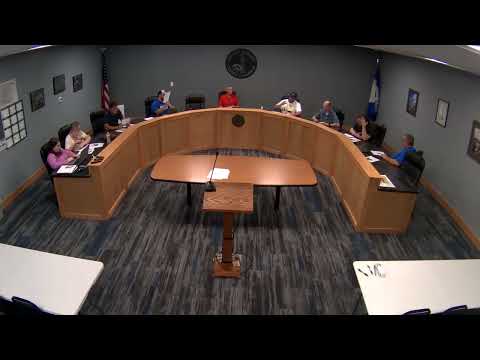
Kasson City — The Kasson City Park Board on Aug. 19 was warned that recent wind storms caused substantial damage to shade canopies and umbrella frames at the municipal pool, and members debated equipment repairs, concession options and staffing for 2026.
Staff member said preliminary accounting showed the season’s outlook "is gonna be worse than last year," and reported torn canopies over the slides, bent ribs in umbrella frames and other storm-related damage that may require custom repairs. "The bows, they're a $100 a piece" and a rib repair could run about $170, the staff member said, though full counts are not yet available.
Why it matters: the repairs affect the pool’s ability to provide shade and supervised areas, and could push maintenance costs into next year’s budget unless the board finds lower-cost alternatives or outside funding. Board members discussed replacing non-breathable canvas covers with more wind-permeable mesh shades, erecting pergolas, or removing canopies and using freestanding umbrellas.
On concessions, staff presented three shaved-ice (snow-cone) machine options priced from about $500 to $3,000. Board members debated whether to replace unreliable slushy machines with shaved-ice equipment or to scale back to simpler frozen treats. "We spend $3,000 on a slushy machine that hardly works," the staff member said, and some members favored trying lower-cost popsicles or vendor nights before investing in new machinery.
Safety and operations also shaped the discussion. Members raised concerns about machine throughput, waste and cleanliness around the pool, and the training required for lifeguards and seasonal staff to operate shaved-ice equipment. One member warned that walking with open snow cones can lead to sticky spills, while another suggested working with local vendors or food trucks to provide variety without capital investment.
Staff also summarized recent health-inspection requirements: lifeguard shepherd hooks must be 12 feet (current hooks are around 7 feet), some rescue tubes need replacement, and inspectors asked for more rigorous inspections of suction drains in the 12-foot area. The inspector also asked the city to address pitting in the lap pool; staff said the city will try to address it this fall but acknowledged budget constraints.
On staffing, the board agreed to recruit a 2026 pool manager and to advertise both to teachers and the public. The staff member emphasized the need for an adult manager to supervise seasonal staff; one board member suggested starting pay of about $20.25 per hour as an attractor.
The board asked staff to continue refining repair cost estimates and to report back with options — including sponsorship or private donations — before finalizing budget requests for the 2026 season. The board did not adopt any formal funding commitments at the meeting.