Get Full Government Meeting Transcripts, Videos, & Alerts Forever!
Get email alerts on the Solar Zoning topic
No spam. Unsubscribe anytime.
Residents urge York County to keep strict setbacks for industrial solar projects
Summary
At a York County zoning hearing, multiple residents urged the zoning board to preserve farmland and maintain strong setbacks for industrial solar projects, citing concerns about heat transfer, crop damage, property values and unclear decommissioning guarantees.
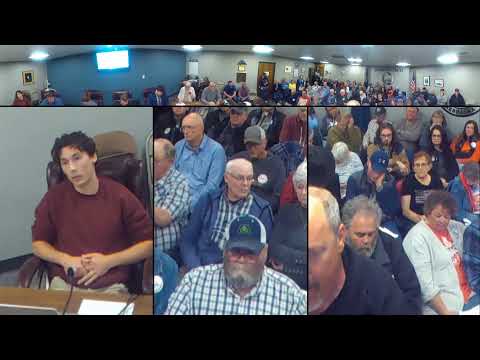
Residents at a York County public hearing on proposed solar zoning rules urged the county to keep strong setbacks and protections for nonparticipating landowners, saying large-scale solar installations could harm farmland, property values and nearby livelihoods.
Several speakers emphasized that the zoning should apply countywide. "I really don't want solar in my sight line," said Chris Yassa of rural Bradshaw, urging the board to ensure setbacks protect homes and agricultural operations. Yassa said he was concerned that setbacks for livestock operations appeared larger than those for houses and that decommissioning obligations in the proposal were unclear.
Why it matters: Speakers said converting prime farmland to industrial solar installations removes land from agricultural production for generations and can alter local economies and property valuations. "The decisions you make tomorrow will shape this county for generations," said JC Todd, a York resident who identified himself as a current candidate for governor, urging the zoning board to "uphold strong zoning protections, support meaningful setbacks, and prioritize agriculture and the people who depend on it." Todd framed the debate as protecting generational farms and local heritage.
Technical and health claims featured prominently in public remarks. One commenter cited studies and websites claiming measurable downwind temperature effects from large solar farms and accused pro-solar advocates of ignoring such evidence. Another speaker who said he had about 50 years of experience in heat transfer and fluid flow argued that "heat gets transferred with the wind, and heat will carry," and warned that that effect could damage crops and animals if setbacks were insufficient.
Speakers also raised procedural and financial questions. Commenters sought clearer, enforceable decommissioning estimates and financial assurances so that the county would not be left with derelict sites at the end of a project's life. Several warned that government subsidies make developers more likely to propose projects on high-quality farmland and asked who would bear loss in neighboring land values.
What the speakers referenced: Commenters named organizations and companies such as OPPD and NextEra Energy and referenced an academic study cited by an online site. Speakers repeatedly asked that zoning rules protect "nonparticipating landowners" and preserve the county's agricultural character.
No vote or formal action was recorded in the provided transcript. The public-comment period included technical back-and-forth, short procedural interjections about time limits and a brief pause to adjust meeting equipment. The zoning board or staff response to the points raised was not included in the transcript.
The hearing continued with additional public comments; next procedural steps or any board decisions were not specified in the transcript.