Get Full Government Meeting Transcripts, Videos, & Alerts Forever!
Get email alerts on the Referendum Development topic
No spam. Unsubscribe anytime.
Janesville council rejects fast-track to April ballot for referendum on GM/JADCO site development
Summary
After extensive public comment by more than a dozen residents urging a referendum on a proposed large-scale development at the GM/JADCO site, the Janesville Common Council voted against moving the petition to the April ballot; the clerk read Ordinance No. 20-26-926, which would refer projects over $450 million to the electorate.
The Janesville Common Council declined to fast-track a citizen petition that would require voter approval for development agreements or land transfers at the GM/JADCO site costing more than $450,000,000.
The clerk read File Ordinance No. 20-26-926 — an ordinance to refer approval of proposed development projects or entry into development agreements exceeding $450,000,000 (or transfer/encumbrance of the GM Jacko site) to the electorate — and the council debated whether to put the measure on the April ballot without the usual second reading and public hearing.
Why it matters: Petition organizers said the effort represents a broad community demand for a voice on projects they consider “mega” in scale. Multiple residents told the council they gathered more than 4,600 verified signatures and urged either immediate adoption of the ordinance or a referendum so Janesville voters could decide directly.
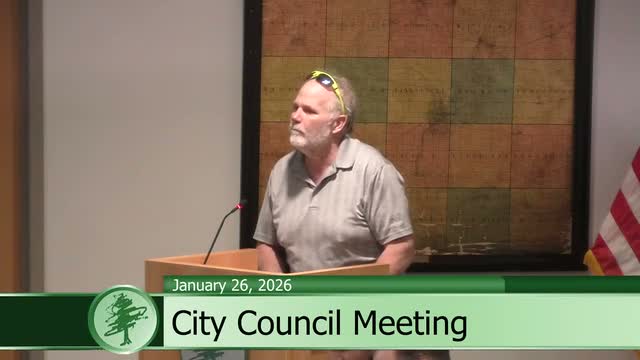
Public testimony: Dozens of residents pressed the council during the public-comment period. Kathy Erdman, a South Side neighbor and Snow Janesville volunteer, told the council the measure would force better staff due diligence and restore public trust, and urged the council to adopt the ordinance or send it to the April ballot. “Anything that large should have been public knowledge and warranted community input,” she said.
Sam Nemitz, a Janesville resident and organizer, described the petition as a “people-powered process” and said, “We got 4,600 people that said we want a say in massive projects that are going to affect our community.” Samantha Ducas, who said she has testified in other Wisconsin communities facing data-center proposals, cited precedents where councils sent similar measures directly to referendums.
Council debate and legal process: Council member Miller moved to suspend the council rules and submit the ordinance to the April ballot without the required second reading and public hearing. The city attorney advised that ordinances require two readings under city rules and that a separate suspension motion would be necessary to waive those rules. Council members criticized and defended the proposal on transparency and timing grounds: some argued an April referendum would let residents decide while the project is still relevant; others said a posted public hearing and more time would produce a better-informed outcome.
Outcome: After discussion and roll-call voting, the motion to move the ordinance to the April ballot failed in the council’s recorded tally. The clerk’s reading of the roll call recorded the final result as a 4–3 defeat; the transcript named Miller, Cass and Erdman among the yes votes. The council did not adopt the ordinance during the meeting; city staff and legal counsel noted statutory and procedural timelines that will govern next steps and ballot-language deadlines.
Authorities and next steps: The ordinance language cited Wisconsin statute 9.2 (sub. 4) in proposing referral to the electorate. The council scheduled a second reading and public hearing for Feb. 9 earlier in the meeting, and city staff told the council that formal ballot language must be filed with the clerk by statutory deadlines. Assistant city staff and the city attorney told members the choice to proceed directly to ballot depends on complying with reading and notice requirements.
What the petitioners want: Petition supporters asked the council either to adopt the ordinance unchanged or to put it on the ballot so the city’s voters — not only seven council members — can approve or reject large development agreements affecting public land. Speakers alternately described the proposal as a necessary check on administrative power and a safeguard for community health, tax implications and long-term land use.
What’s next: The council will revisit procedural requirements, ballot-language deadlines and public-hearing scheduling in upcoming meetings. City staff also announced a series of workshops on data centers (energy, economic/tax impacts, water use, labor/education) aimed at informing the public and council before future decisions.