Get Full Government Meeting Transcripts, Videos, & Alerts Forever!
Get email alerts on the Recreation Center topic
No spam. Unsubscribe anytime.
Severance board hears Windsor feasibility study for shared recreation center; presenters estimate about $100 million and suggest Windsor cover roughly 75%
Summary
Town and consultant presented a feasibility study for a potential shared WindsorSeverance recreation center, citing strong demand for fitness, courts and multipurpose space, an estimated construction and furnishing cost near $100 million, and an early proposal that Windsor would cover about 75% of capital costs with Severance covering roughly 25%.
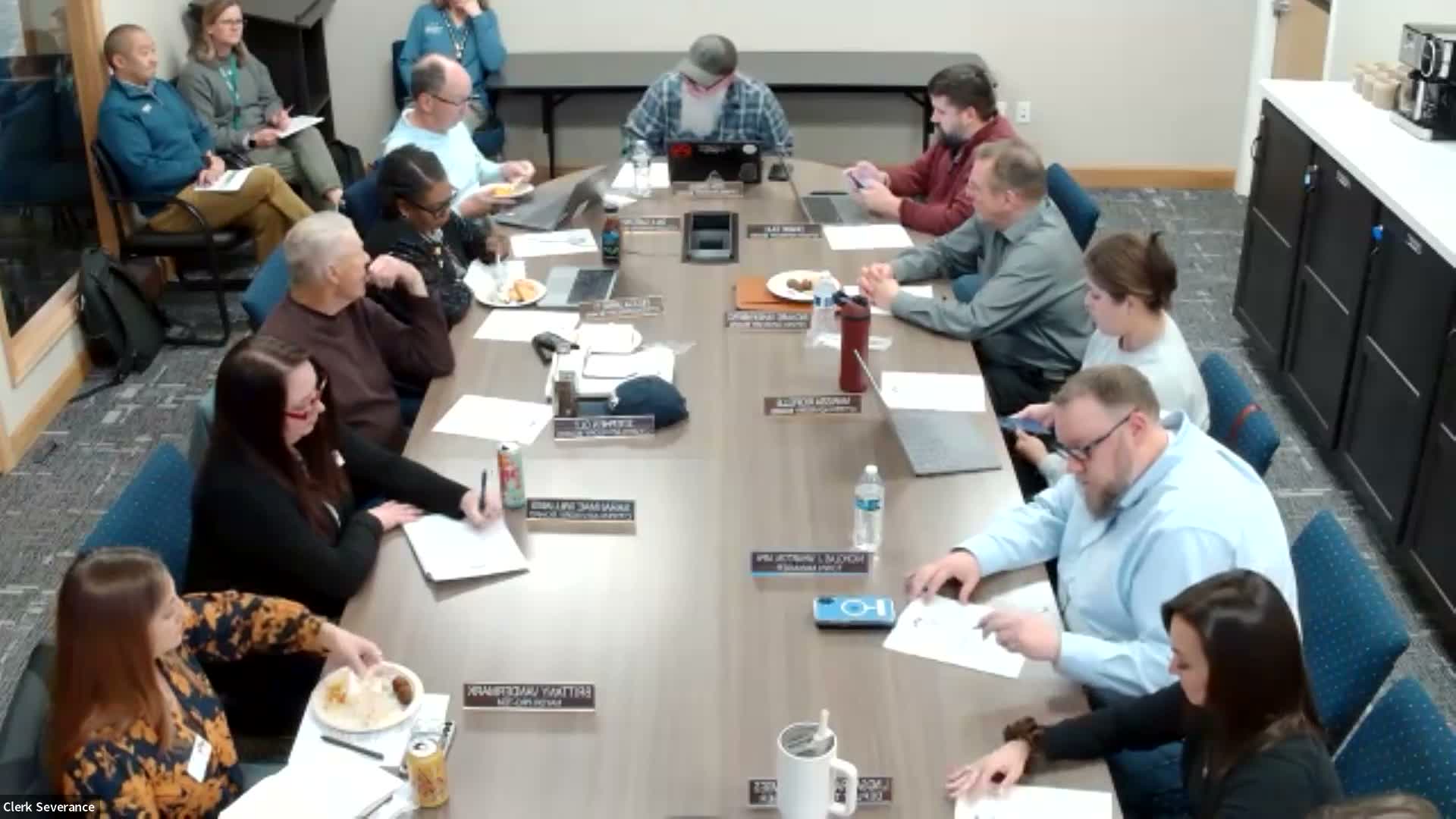
SeveranceCitizen Advisory Board members heard a presentation from Windsor officials and consultant Daniel of REG on a feasibility study for a potential shared regional recreation center. Presenters said the project would be sized to serve a local 20-minute primary service area and could draw users from a wider 60-minute region.
"Market feasibility is really our due diligence against national standards," Daniel of REG told the board, describing the three-layer service-area approach the team used to test demand. He said that, against national benchmarks for the region, activities such as walking, weightlifting, yoga and pickleball show above-average participation potential.
Tara Foch, Windsordirector of parks, recreation and culture, said Windsor currently has roughly 6,800 members at its existing recreation center and is operating at capacity. "We do have 6,800 members at the current recreation center," she said, noting that regular users include seniors and families and that the town provides a subsidy from a dedicated enterprise fund to support operations.
Presenters gave an initial order-of-magnitude cost for a center of the size and program mix shown in their concept diagrams: "looking at 2027—28 construction costs, this size facility is approximately $100,000,000," a Windsor representative said. Windsor staff reported early discussions with the Severance board about sharing costs on a 75% (Windsor) to 25% (Severance) basis, but emphasized any financial commitment would follow community input and a bond election in Windsor.
Residents and board members pressed the presenters on site-selection logic and operational risk. The consultant said no site has been selected; from a utilization perspective Windsor recommended focusing initial site analysis east of the existing facility where growth is concentrated. The consultant and Windsor staff also cautioned that tournament-driven revenue can be attractive but that tournaments occupy relatively few weekends per year and can displace regular community access.
Severance residents raised local service gaps as a reason to explore partnership. One resident urged Severance to pursue closer access to senior services and local programming rather than forcing seniors to travel: "Severance citizens who meet the criteria ... have to go to someplace else to get the services," the resident said, noting Meals on Wheels and county programming are not currently available locally.
Presenters laid out next steps: finish the feasibility study (expected late March, per presenters), run additional Severance-specific community engagement and, if there is local support, work with a public-survey firm to test ballot language for a bond. Windsor staff repeatedly stressed final capital decisions would require voter approval in Windsor and that operational-cost modeling would be refined as the study proceeds.
The board did not take a vote on funding or partnership at this meeting; presenters asked the board to help distribute the study's community survey and said they would return with finalized findings and recommended next steps.