Get Full Government Meeting Transcripts, Videos, & Alerts Forever!
Get email alerts on the Development Impact Fees topic
No spam. Unsubscribe anytime.
Grand Junction planning commission forwards proposed changes to development impact-fee rules to council
Summary
The Planning Commission voted 7-0 April 14 to forward staff-recommended code text amendments on development impact fees — moving fee-setting to council, allowing 'as-needed' fee studies, clarifying park-fee offsets for prior in-lieu payments, and adding a refund mechanism tied to a reduced park fee — with staff urging the changes and commissioners urging continued oversight.
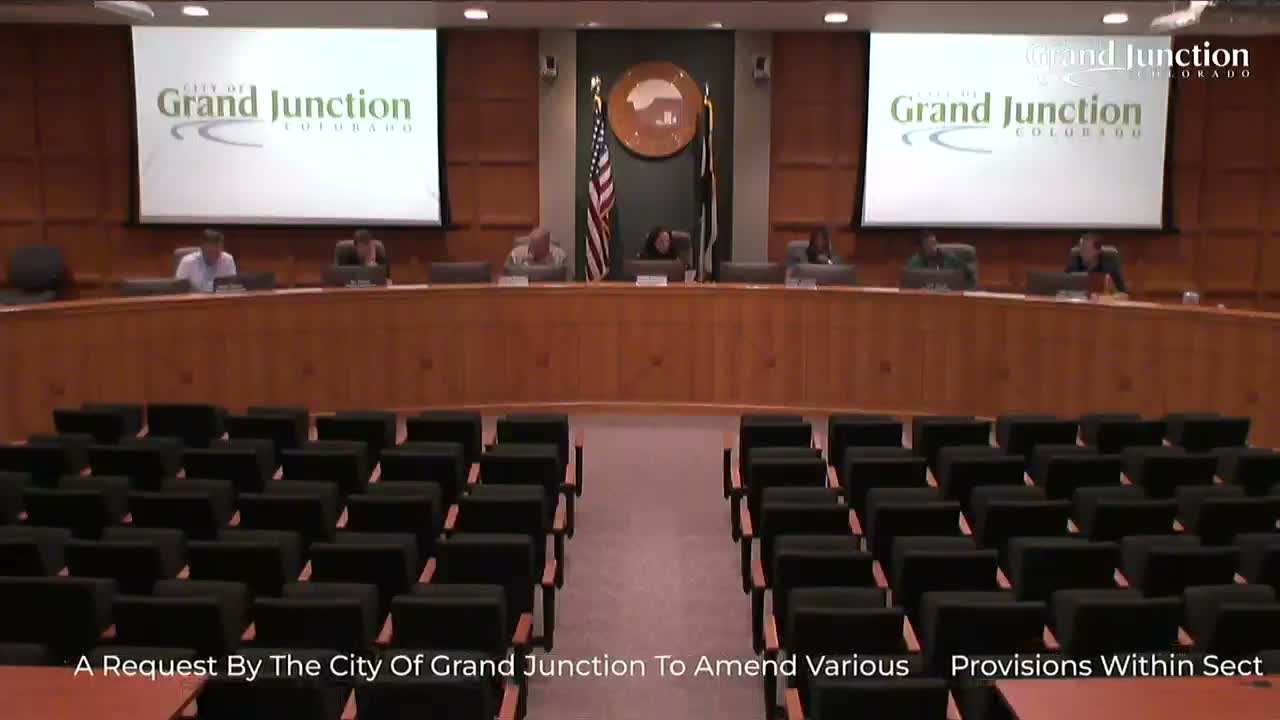
On April 14, 2026, the Grand Junction Planning Commission voted 7-0 to forward to City Council a set of staff-drafted amendments to Title 21 of the Zoning and Development Code that revise how the city handles development impact fees.
Tamara Allen, the city’s Community Development Director, told the commission the changes are fourfold: eliminate the prescriptive six- and eight‑year study timeline in favor of an 'as‑needed' approach, move the actual fee-dollar table to City Council’s fiscal purview, codify a method to credit prior park land dedications or in‑lieu fees (a "park offset"), and create a refund process for developers if a lower fee table later takes effect. Allen said the staff report concludes the proposed text changes meet the code’s review criteria and recommended favorable consideration.
Allen explained the park-offset language is intended to avoid charging a developer twice: "If you've already done kind of your fair share in dedicating or paying your in‑lieu fee, if you're coming in to actually build your lots or your units, [you] will get credited for what you've contributed in the past to that park fee," she said. Staff also told commissioners the city manager could consider cash reimbursement in limited budgetary circumstances for developers who previously paid but have not yet absorbed those fees through building activity.
The amendments would not, staff emphasized, transfer the specific dollar amounts of fees to the Planning Commission. Allen said the city treats fee numbers as fiscal policy for City Council and that the proposed ordinance packet shows the new fee table for the commission’s review, but the commission itself is not being asked to set the fee amounts.
Several commissioners pressed staff on the consequences of changing the study cadence from a fixed schedule to an 'as‑needed' model. One commissioner who previously served on City Council said they were "reticent to just jettison this without a little bit of discussion," arguing a date‑certain review helps ensure fees are revisited even as councils and priorities change. Another commissioner noted the proposed code includes indexing elements to account for inflation and called 'as‑needed' updates common practice in the industry.
Allen responded that the city has relied on a mix of annual budgeting and targeted studies and that the 'as‑needed' approach reflects industry practice and staff capacity, while acknowledging the commission and council would continue to monitor fee levels. On the question of budget impacts from possible refunds, Allen said refunds would be request‑driven and that the city’s CFO and city manager expect to issue only a small volume of refunds if requests arise.
Staff also described how the current park‑fee calculation was changed after council workshops and correspondence with stakeholders, including the Home Builders Association. To address concerns about how land value was estimated, staff said they moved from transaction prices to an appraised-value dataset covering about 23 representative properties and just under 200 acres; that change altered the fee calculation that council later directed staff to reduce.
With no public commenters in the room or online, a commissioner moved to forward a recommendation of approval to City Council for City file ZCA-2025-737 "with the findings of fact listed in the staff report." The motion was seconded and passed unanimously; the chair announced the motion passed 7 to 0. The commission then closed the meeting and adjourned.
Next steps: the commission’s favorable recommendation will be transmitted to the Grand Junction City Council for its consideration. The staff report and ordinance text, including the proposed fee table and calculation method, are available in the meeting packet for council and public review.