Get Full Government Meeting Transcripts, Videos, & Alerts Forever!
Get email alerts on the Parking topic
No spam. Unsubscribe anytime.
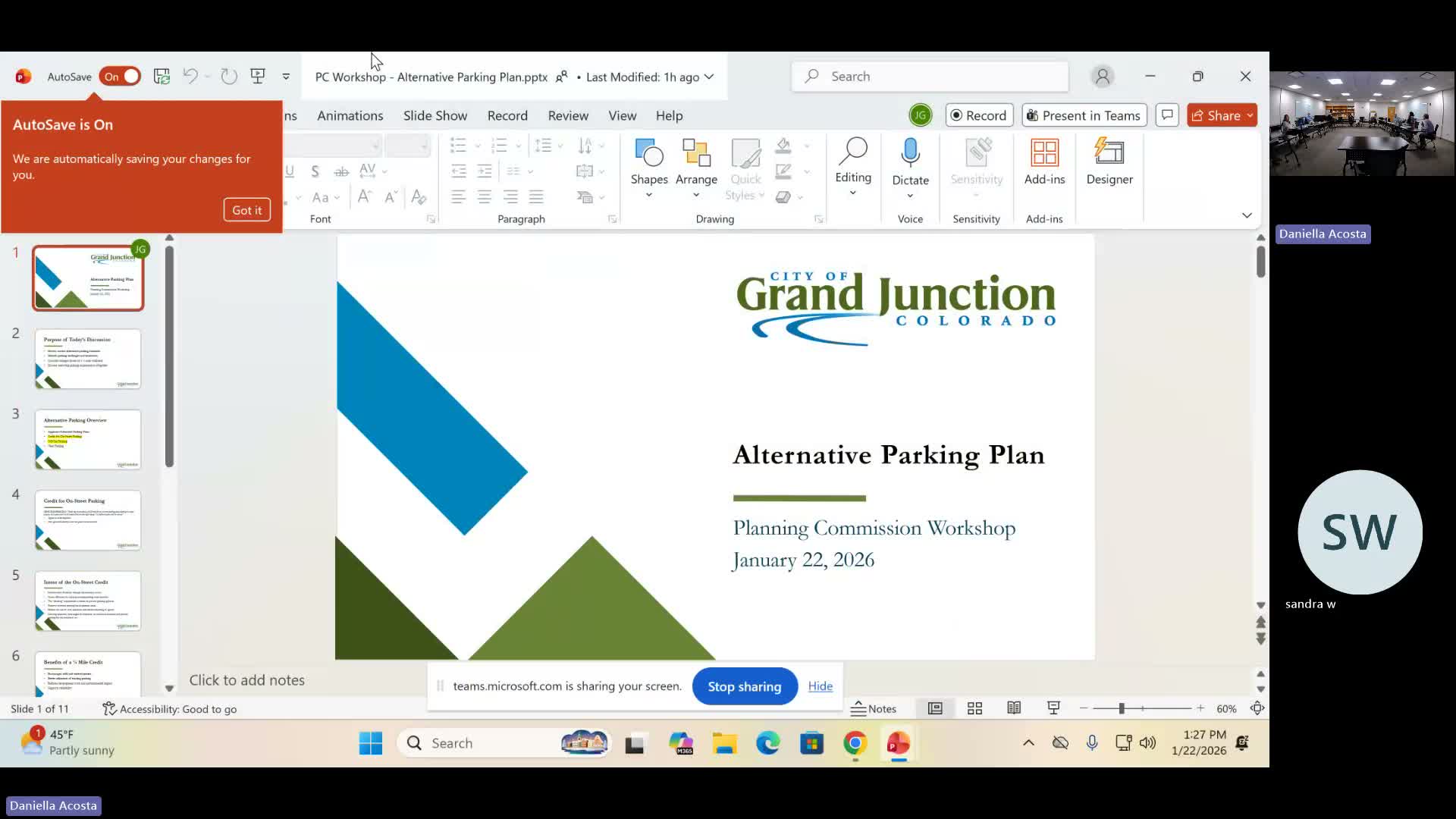
Staff proposes quarter-mile walk-shed for parking credits; planners debate spillover risks
Summary
City staff proposed replacing the current "abutting" on-street parking credit with a quarter-mile (≈1,320 ft) walk-shed to count additional on-street or off-site parking toward minimums; commissioners raised concerns about double-counting, neighborhood spillover and differences between residential and nonresidential uses.
John, an associate planner, presented a series of alternative parking-plan approaches aimed at easing redevelopment in constrained infill sites. He described four primary alternative mechanisms — applicant-submitted parking analyses, valet credits, on-street abutting credits, and off-site parking — and proposed an amendment to replace the current "abutting" on-street requirement with a quarter-mile (roughly 1,320 feet) walk-shed to count street or off-site spaces toward required minimums.
"We would like to lift that limitation somewhat and propose a quarter mile walk shed," John said, explaining that a quarter-mile is typically a two- to five-minute walk and would allow developers to utilize existing on-street parking in close proximity.
Commissioners questioned trade-offs. Staff warned that expanding credit beyond abutting spaces risks double-counting and spillover into adjacent residential neighborhoods, while others said the change could unlock infill redevelopment and reduce construction costs. Several members recommended different treatments for residential and nonresidential projects and requested safeguards — such as limiting credit where crossings exceed defined widths, retaining accessible spaces on-site, and requiring enforceable agreements for off-site parking.
No code change was adopted at the workshop. Staff were asked to return with refined language, examples, and safeguards and to bring the matter back to a subsequent workshop or hearing.