Get Full Government Meeting Transcripts, Videos, & Alerts Forever!
Get email alerts on the Plat Expiration topic
No spam. Unsubscribe anytime.
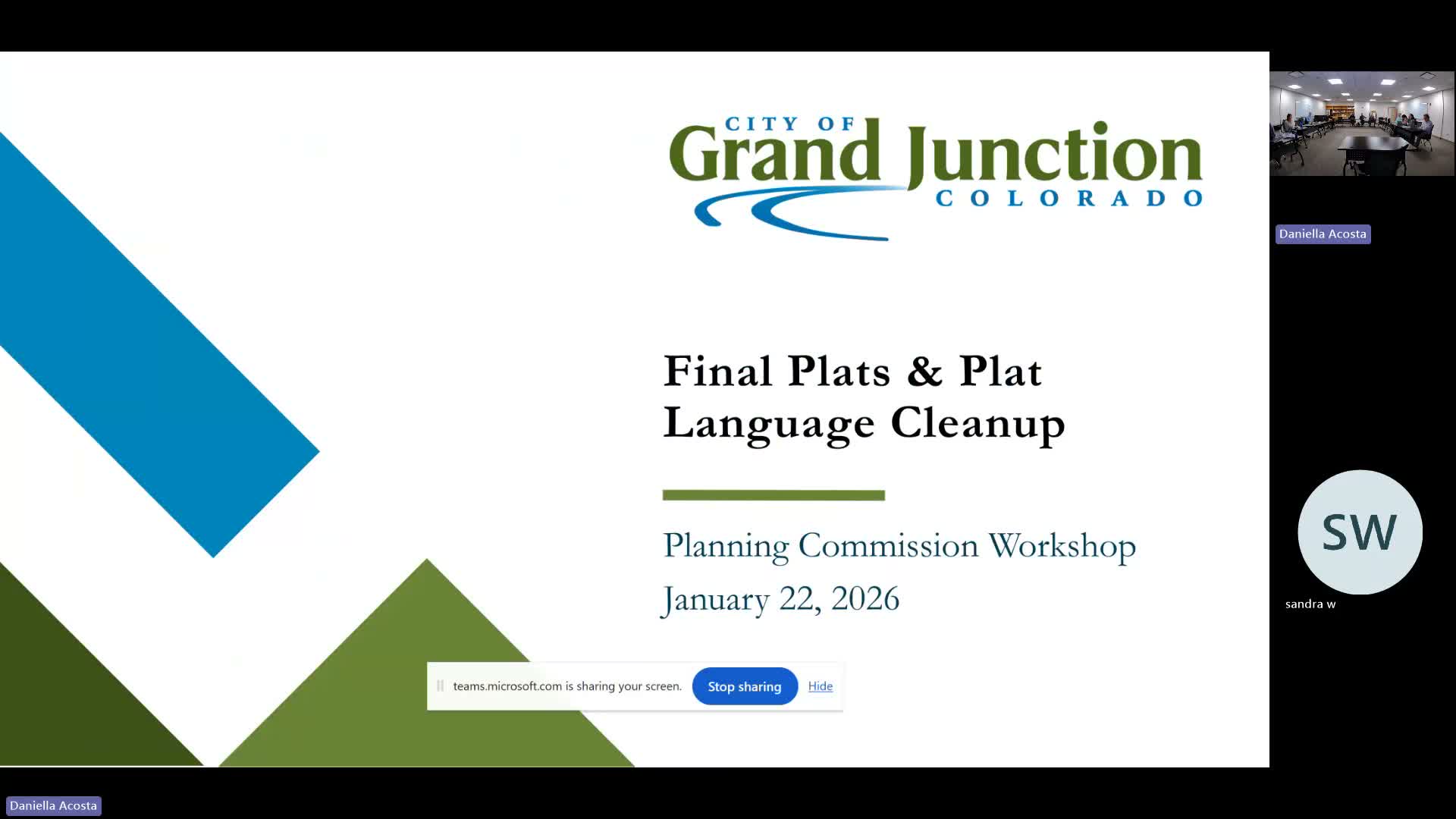
Planners consider carving out active construction from two-year final-plat deadline
Summary
Grand Junction planners asked staff to draft code language that would prevent final subdivision plats from automatically expiring if "meaningful construction" has begun, while staff will research objective evidence (invoices, inspections) and return proposed language for the commission's review.
Thomas, a planning manager leading the presentation, told the Planning Commission that staff is proposing targeted edits to the city code governing final plat recording to avoid forcing projects back through full review when construction is already underway. "We've decided that we're comfortable ... having paper copies be recorded," he said, describing a separate clean-up to allow paper subdivision plats now that Mesa County no longer stores MILRs.
The central policy question was how to define when a plat should remain valid. Thomas said staff are considering objective triggers such as accepted invoices, construction inspections or public-infrastructure acceptance. "In my past job ... the final plat shall expire two years following cessation of significant work," he said, and staff outlined a range of evidentiary options for determining whether significant work has occurred.
Commissioners raised practical concerns. Several members said the existing ability for applicants to propose phasing schedules — which can extend a project's time horizon — already provides some flexibility but is underused. One commissioner asked, "What's the downside to defaulting to the longest extension ... 6 years?" Other commissioners pushed back that multi-year phasing can create an administrative tracking burden and make it harder to know which code applies when later amendments are sought.
The commission did not vote on code text but coalesced on a direction: staff should research peer jurisdictions and legal considerations and return with draft language that would more narrowly define "active construction" or "meaningful activity" as a legitimate exception to the two-year recording deadline. Thomas said staff would bring proposed language back at a future workshop or hearing for formal consideration.
If adopted, the change would aim to reduce situations in which developers must resubmit older approvals under new code simply because of a missed technical recording deadline, while preserving city oversight about whether a project remains viable and safe.
The commission asked staff to present clear, administrable criteria for exceptions and to show examples of how proposed language would work in practice. The item will return to a future workshop; staff said they would consult the city attorney and peer cities in drafting the code amendment.