Get Full Government Meeting Transcripts, Videos, & Alerts Forever!
Get email alerts on the Traffic Calming topic
No spam. Unsubscribe anytime.
Neighbors press Isanti committee for traffic calming after Dogwood Street restriping
Summary
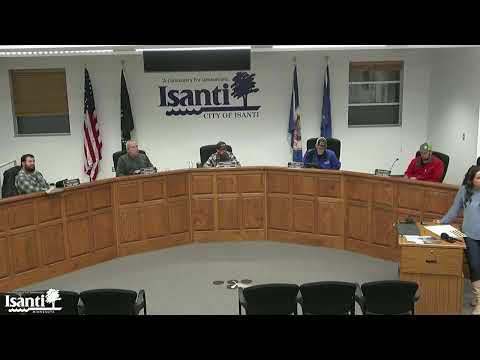
Residents told the Isanti City Committee of the Whole that recent milling, repaving and restriping on Dogwood Street has made the block wider and worsened speeding; staff agreed to collect speed data, inspect curb work, check removable-bump costs and return the item to the Dec. 16 council meeting.
Residents asked Isanti City leaders on Tuesday to revisit a recent road project they say has made one block of Dogwood Street more dangerous for children.
"We have more than 20 children living on this one block," Alyssa Mahoney said. "A roadway design that encourages faster speeds is simply not acceptable in a neighborhood with this many young children." Mahoney gave her address as 809 Dogwood Street SW and asked the committee to reinstate alternate on‑street parking, correct misaligned curb lines, and pursue traffic‑calming measures such as removable speed bumps.
City traffic staff and the project's consultant said the current layout was chosen after public outreach and engineering review. Jason Cook, who described his team's traffic analysis, said the project added fog lines and narrowed the painted lane widths so drivers feel constricted even when parked cars are absent. "Those wide white lines are just that visual restricting feel," Cook said, adding that typical changes from these stripe adjustments reduce average speeds by one to two miles per hour.
Cook and council members also said permanent speed bumps were not feasible where state funding or state route designation applied. "Speed bumps aren't allowed on state routes anyway," he said, noting that removable speed bumps paid for with local funds might be possible but that historical studies show mixed results on long‑term safety benefits.
Council members and Mahoney pressed staff for concrete next steps. Miss Wood and other staff said they will: 1) ask the police to deploy a speed monitoring sign at the block to collect follow‑up data, 2) ask public works to inspect the curb and compile a contractor punch list for corrections, and 3) look into the cost of removable speed bumps and report the findings to the council and to Mahoney. Staff recommended bringing the item back to the Dec. 16 city council meeting so any policy or ordinance changes could be considered with the full council; the committee agreed to the follow up.
Residents also raised concerns about construction quality, including crooked or misaligned curb lines and driveway impacts. Cook said staff is preparing a punch list for the contractor and that new work carries a two‑year warranty that would cover correctable issues identified before project closeout.
The committee did not adopt a formal ordinance or motion on the street design at the meeting; staff said it will collect the requested data and return with a recommended next step at the Dec. 16 council meeting.