Get Full Government Meeting Transcripts, Videos, & Alerts Forever!
Get email alerts on the Mental Health Policy topic
No spam. Unsubscribe anytime.
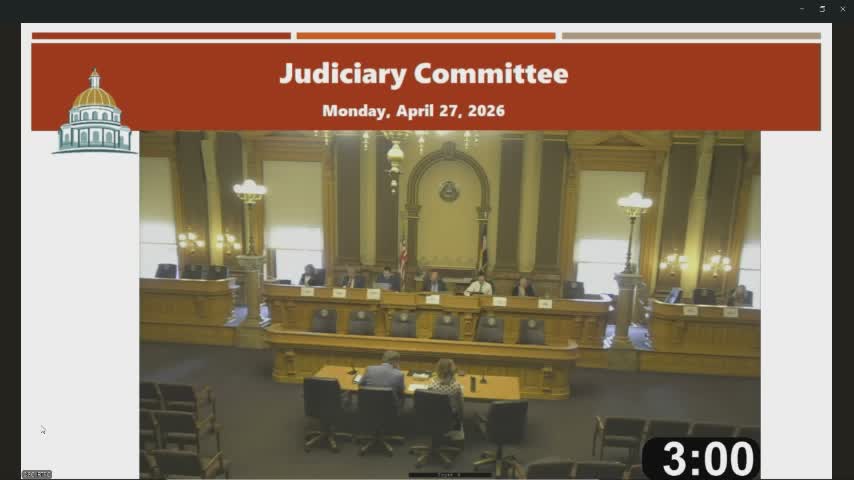
Heated hearing on bill to extend civil timelines for alleged harm from conversion therapy
Summary
House Bill 13-22 would extend or remove the statute of limitations for civil claims against licensed mental-health providers accused of delivering conversion therapy; more than 40 witnesses testified in alternating pro and con panels, and the committee adopted a viewpoint-neutralening amendment (L27) before forwarding the bill.
Senators Malika and Cutter introduced House Bill 13-22, which would extend or remove civil statutes of limitation for claims against licensed mental-health providers alleged to have engaged in conversion therapy. "This bill gives people who have been harmed by conversion therapy more time to bring a civil claim against licensed mental health practitioners," Senator Malika said.
Proponents included survivors, advocacy groups and medical professionals who described delayed disclosure and long-term psychological harm. Joyce Calvo, mother of a survivor who died by suicide, read an open excerpt describing her daughter's experience and urged lawmakers to give survivors time to seek justice. "As I sought out legal justice before and after Alana died by suicide, there were many roadblocks. This bill would have given our family a chance at justice," she said.
Opponents — faith groups, professional counselors and constitutional-advocacy attorneys — argued the measure was an unconstitutional end run around the U.S. Supreme Court's recent decision in Charles v. Salazar (Childs v. Salazar) and that it would chill protected speech in therapy, upend parental rights and create potentially open-ended liability. Constitutional counsel warned the bill's causation and burden-of-proof rules risked being legally vulnerable.
Sponsors offered amendment L27 to revise the bill's definition of conversion therapy to be viewpoint neutral; the committee adopted L27 and then moved the bill to the Committee of the Whole by recorded vote (5–2).