Get Full Government Meeting Transcripts, Videos, & Alerts Forever!
Get email alerts on the Worker Protections topic
No spam. Unsubscribe anytime.
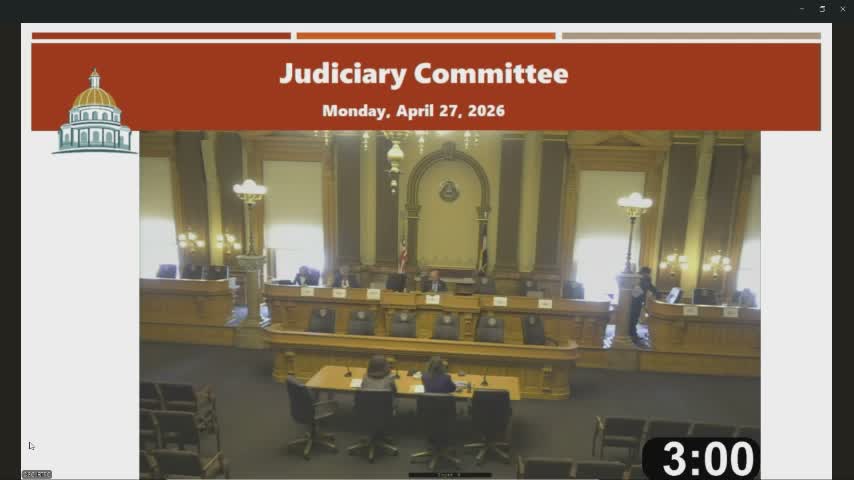
Senate panel backs bill to make employer confiscation of IDs a crime
Summary
House Bill 12-83 would bar employers or their agents from confiscating, retaining, or demanding employees' government IDs (driver's license, passport, state ID) and permit civil action; sponsors said the change prevents coercive control and immigration-based threats, and the committee adopted an employer-definition amendment before advancing it.
Senator Marchman introduced House Bill 12-83 as a straightforward worker-protection measure that would criminalize employers' confiscation or retention of an employee's government-issued identification. "Can an employer take your ID and hold on to it?" he asked the committee, then answered: "No."
Sponsor Senator Benavides told the committee the bill raises civil remedies and can increase penalties — for example, when an employer weaponizes immigration threats — and that the measure protects vulnerable workers from being trapped in exploitative situations. "When a person loses access to their ID they lose access to everything attached to it," he said.
Owen Brigner of the Colorado Municipal League testified in an "amended neutral" position after sponsors adjusted the draft to ensure the bill's employment nexus did not unintentionally capture municipal workers performing nonemployment functions. Michael Neal of Colorado People's Alliance urged passage, while witnesses raised a range of specifics about the acceptable time an employer could hold a document; the sponsors and advocates discussed compromise language (amendment L24) and adopted it without objection.
The committee adopted L24 to narrow the definition of "individual" covered and then moved HB 12-83 to the Committee of the Whole with a favorable recommendation.