Get Full Government Meeting Transcripts, Videos, & Alerts Forever!
Get email alerts on the Veterans Services topic
No spam. Unsubscribe anytime.
Indiana veterans office lays out new accreditation standards for county service officers
Summary
Cambria Sparks of the Indiana Department of Veterans Affairs told Rush County commissioners that new accreditation standards under Indiana Code 10-17-1-9 require service officers to meet training, reporting and office-hour requirements and to use the state claims-management system; counties have until June 30 to comply.
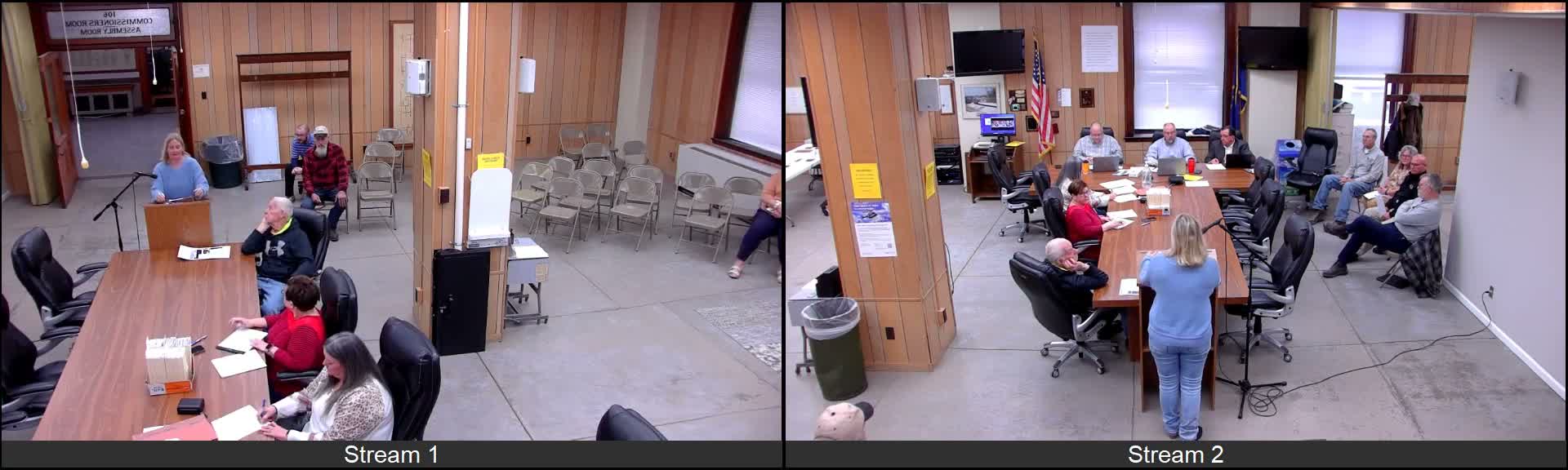
Cambria Sparks, district service officer with the Indiana Department of Veterans Affairs, told Rush County commissioners that new state accreditation standards will change how county and city veterans service officers operate.
Sparks said the standards, cited in Indiana Code 10-17-1-9, require accredited service officers to meet specified office-hour thresholds, maintain private office space for sensitive veteran consultations, use the IDVA claims-management system for intake and tracking, and hold active PIV (personal identity verification) cards to access veterans’ records. "Everyone in these rules must fully meet these standards to remain accredited with the IDVA," Sparks said.
The changes include a work-hour requirement intended as 1,000 hours per year; Sparks clarified during questions that the standard is annual rather than weekly. Commissioners pressed on whether a contracted service officer must be an employee. Sparks said the officer "needs to be considered an employee," but that part-time status is acceptable if the position meets the hours requirement (roughly 20 hours per week to reach 1,000 hours a year). She added that the standards went into effect Jan. 1 and that counties have until June 30 to come into full compliance.
Sparks also described mandatory training and testing: one district training in spring, a four-day annual training in June and another district session in September, plus required online modules and proficiency exams. She said the IDVA will monitor activity recorded in the claims-management system and that failure to comply can trigger notices, a 30-day plan-fix window, and ultimately a commission hearing that could revoke accreditation.
The rules set out a compliance process: the IDVA will notify the county and the officer of issues, allow time to submit a corrective plan, and, if unresolved after the allotted period, hold a hearing where the officer may present evidence before a final determination.
Sparks noted existing local officers by name when describing compliance: she said "Dan" currently uses the claims-management system and holds the required credentials. Commissioners said they would consider the employment status of Nathan (a locally contracted officer) in light of the standards. Sparks said she will return after July for an update on county compliance.
The presentation concludes with a clear next step for the commissioners: verify that local service officers meet the training, reporting and employment conditions required to retain IDVA accreditation.