Get Full Government Meeting Transcripts, Videos, & Alerts Forever!
Get email alerts on the Land Use Self Storage topic
No spam. Unsubscribe anytime.
Cedar Hill council unanimously denies proposed Clark Road storage complex after neighborhood opposition
Summary
After more than two hours of testimony from residents, faith leaders and experts, the Cedar Hill City Council voted unanimously Jan. 13 to deny a conditional-use permit for a proposed 91,000-square-foot self-storage complex on South Clark Road, citing inconsistency with the city's comprehensive plan and concerns about neighborhood impact.
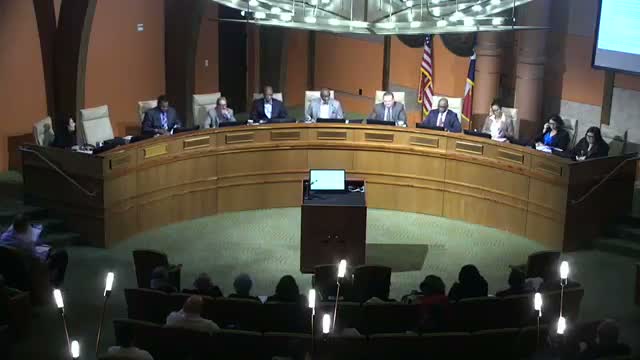
Cedar Hill, Texas — The Cedar Hill City Council voted unanimously on Jan. 13 to deny a conditional-use permit for a proposed 91,000-square-foot self-storage complex at approximately 306 South Clark Road after widespread public opposition and careful council deliberation.
Brady McDonald, the applicant and developer, told the council the project would be a gated, Class A facility with extensive landscaping and security features and that a trip-generation estimate from the ITE manual projects about 14 peak-hour trips. He said there would be on-site staff during business hours, cameras across the facility and no public dumpsters to reduce illegal dumping. "We went back and worked with staff to provide more screening," McDonald said during his presentation.
Opponents argued the use is inconsistent with the city's 2022 comprehensive plan, would oversaturate a corridor already dotted with storage operations, and would harm neighborhood character and safety. "A storage complex brings intense traffic, moving trucks going fast down Clark Road," said Consuelo Aguilar, who lives next to the proposed site and said the project would disrupt seniors and children in the neighborhood. Dr. Leija Lee, who cited the comprehensive plan, told the council the corridor is designated for suburban single-family uses and that a 660-unit industrial storage complex does not match that vision.
Faith leaders and community organizations also opposed the proposal. Pastor William L. Askew Sr. said the development could conflict with worship services and community events at an adjacent chapel, citing rolling gates, truck traffic and noise. Elizabeth Duncan, a volunteer and retired law-enforcement sergeant, urged denial on public-safety grounds, saying unmanned or lightly staffed storage models increase theft and unauthorized habitation.
Supporters, including leaders from Omni Fellowship, said selling or leasing church-owned land to the developer would allow the congregation to pay debts and expand community programs. "This opportunity will allow the church not only to pay off a major portion of our debt, it will also allow us to fund continued opportunities that we have been giving back to the community," said Randall Chase, the church's director of operations.
Council members repeatedly referenced the comprehensive plan in their deliberations. "I'm not against the storage facility. I'm against it in this location," said Councilwoman Aziz, who said she helped shape the comp plan and would not support changing its direction without an overwhelming reason. Council member Daniel Hayden moved to deny the permit; Councilwoman Aziz seconded. Mayor Steve Mason announced the council was unanimous in the denial.
The motion the council approved was to deny Case CUP7232025, the conditional-use permit for a mini-warehouse self-storage facility on South Clark Road. The council did not adopt alternative conditions or remand the case; the denial leaves open the possibility the applicant may seek another site or revise the proposal and return.
The council's action followed a public hearing that included residents, educators, business owners, church leaders, an environmental attorney and the applicant. The mayor also noted procedural requirements tied to state law and the number of written protests received, explaining a supermajority would have been required for approval in light of that opposition. The denial was the final council action on the item for the evening.
What happens next: The applicant may pursue alternative sites, revise the proposal, or explore other options outside the city's approval process. For now, the property where the storage facility was proposed remains without the conditional-use permit the developer sought.