Get Full Government Meeting Transcripts, Videos, & Alerts Forever!
Get email alerts on the Gm Jatco Petition topic
No spam. Unsubscribe anytime.
Janesville council to send citizen petition on GM site to November ballot after hours of public comment
Summary
After a three-hour public hearing with more than 40 speakers, the Janesville City Council voted unanimously to send a citizen petition requiring voter approval for very large projects on the former GM/JATCO site to the November general election. Council also heard staff warnings that the petition language may be legally vulnerable.
The Janesville City Council voted unanimously Feb. 9 to submit a citizen-initiated ordinance to the November general election that would require voter approval for proposed development projects or development agreements exceeding $450 million that transfer or encumber the former GM/JATCO site.
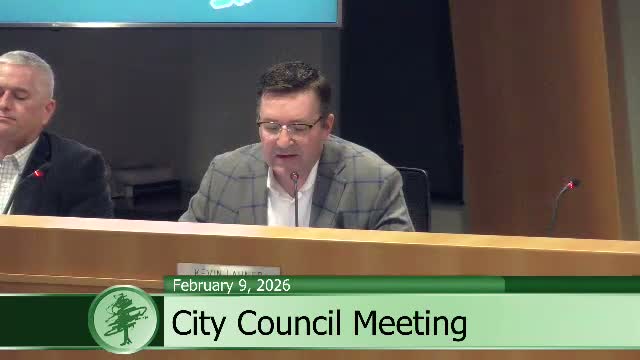
City Manager Kevin Lehner opened the council’s second reading and public hearing by outlining the city’s current negotiations with a developer identified in city materials as Rydian Partners LLC (presentation materials also used the name Viridian Partners). Lehner said the city is in a 120-day negotiating window and that the developer has proposed building a multi‑building data center that, depending on available power, could be “up to an 800‑megawatt facility.” He said independent consultants estimate remediation of the contaminated site at roughly $30,000,000, and he attributed to staff projections that the full buildout could generate roughly $3.7 billion in total economic impact, support 21,000 jobs (including construction supply‑chain impacts), and produce about $12 million a year in tax revenue across taxing jurisdictions, of which he said approximately $4.2 million would go to the city annually at full buildout.
Lehner also told the council that the city attorney and outside counsel have reviewed the petition’s draft ordinance and concluded the language as written is “likely illegal and unenforceable,” creating a substantial risk of litigation whichever path the council chooses. “There is a very high likelihood that the city will be sued by somebody outside the city,” he said, adding that a city vote to adopt an unenforceable ordinance could prompt litigation and other expense for taxpayers.
The public hearing produced sustained comment from residents on both sides of the issue. Eileen Newcomer, deputy director of the League of Women Voters of Wisconsin and a Janesville resident, said the 4,600‑plus signatures collected for the petition reflect deep civic engagement and urged the council to respect the petition process: “At a time when the public is losing trust in government, it is really important that the government is accountable, is listening to people, and is respecting their rights,” she said.
Organizers and many supporters of the petition repeatedly framed the measure as pro‑community participation rather than anti‑development. Sam Nemitz, a petition circulator, summarized the position: the petition “ensures democratic development” by giving residents a guaranteed vote on projects above the $450 million threshold.
Speakers opposed to immediate adoption warned that the ordinance’s broad $450 million threshold could impede multiple types of redevelopment and steer potential developers away. Adam Schultz, a local commercial broker who previously represented the GM site, told the council he has reviewed decades of interest in the property and said the economics of the site have historically discouraged most buyers; after meeting with city staff, Schultz said, “I truly believe they have our best interests in mind here.”
Union and labor representatives urged the council to weigh the remediation commitment and jobs the proposal could bring. Garrett Harwick, president of the Southern Wisconsin Building and Construction Trades Council and an IBEW Local representative, said the developer being discussed had offered “$30 to $40 million up front to remediate the site” and argued the proposal would replace long‑standing blight with investment and construction opportunities.
After more than three hours of testimony, Councilmember Williams moved to refer the ordinance to the fall general election and directed the city attorney to draft ballot language consistent with Wisconsin Statute chapter 9.2. The motion was seconded and passed unanimously. Council members who spoke in favor of referral said a November vote would allow wider participation and give voters more time to review technical studies that are still in progress, including a consultant report from the city’s brownfield advisor and planning work from the city’s master planning consultant.
Next steps: the city attorney will prepare ballot language and calendar the referendum for the November general election. The vote does not end the city’s negotiation window; Lehner told the council the process could continue but that the city retains multiple discretionary steps, and he emphasized that future contracts, environmental approvals and utility agreements would all be required before any project could move forward.
(Reporting note: the developer name appears in council materials as Rydian Partners LLC and presentation language also used Viridian Partners; the transcript uses both names. The city manager’s presentation supplied the economic and remediation estimates summarized here.)