Get Full Government Meeting Transcripts, Videos, & Alerts Forever!
Get email alerts on the Gm Site Data Center topic
No spam. Unsubscribe anytime.
Residents press Janesville council for more transparency on proposed GM‑site data center as city schedules closed session
Summary
Dozens of residents urged the Janesville Common Council to release more information and involve independent health and economic experts before finalizing steps tied to the Letter of Intent for a data center at the former GM site; City Manager Kevin Lehner said the purchase‑and‑sale negotiations continue and the council moved to a closed session for legal counsel.
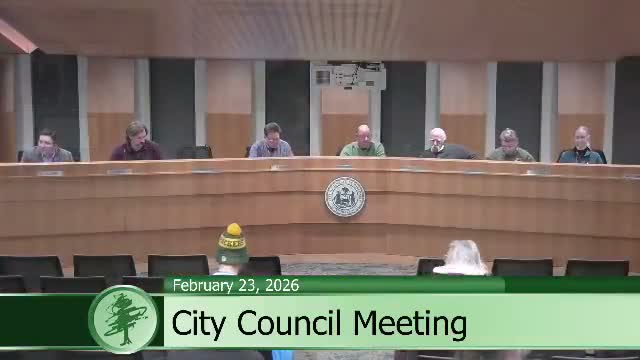
Dozens of residents urged the Janesville Common Council on Feb. 23 to demand clearer, third‑party analysis before the city proceeds with a Letter of Intent (LOI) and any purchase‑and‑sale agreement for a proposed data center at the former GM site.
At the start of the public‑comment period, Cassandra Pope asked council members to identify which independent experts had advised them during the LOI’s 120‑day due‑diligence window and when unbiased health and welfare experts would speak to the community. "What unbiased health and welfare experts have spoken to the city council?" Pope asked, pressing for documentation of the pros and cons used to justify moving forward.
Other speakers raised parallel concerns. Nick Reed warned that the mere prospect of a large data center can drive utility companies to anticipate higher demand and trigger costly infrastructure upgrades and preemptive rate adjustments. "Not disclosing pertinent information to the public before you secure funding is extremely disingenuous and creates distrust," Reed said. Deborah Bridal cited national reporting that linked industrial‑scale projects to water‑quality and health concerns and urged the council to preserve Janesville’s drinking water.
Several commenters focused on long‑term fiscal risk and local benefits. Kathy Erdman questioned whether concentrating a large share of the city’s tax base in a single volatile taxpayer was prudent, asking whether the city had modeled downside valuation scenarios. Austin Diehl said the GM site redevelopment would shape Janesville for decades and urged the city to prioritize proposals that maximize local payroll and trades opportunities over uses that are capital‑intensive but employment‑light.
City Manager Kevin Lehner told the council he had briefed legal counsel and staff on the negotiations and described the purchase‑and‑sale agreement as a step that would be followed by separate approvals — including a development agreement, environmental remediation plans and a power agreement with the local utility — and that the full entitlement and permitting process could take about two years. Lehner said some elements described in a future development agreement could include noise limits, cooling‑system types, building layout and buffer requirements.
Lehner added that the site currently is considered closed with continuing obligations under the Department of Natural Resources (DNR) process and that a materials management plan to address contaminated soils would be required if the city moves ahead. He said there are many unknowns about final site layout and mitigation requirements and that it would be premature to present full remediation plans now.
Following the public comments and staff updates, the council voted to convene into a closed session under Wisconsin Statute 19.85(1)(e) to receive a legal‑counsel update on the purchase‑and‑sale negotiations for the GM/Jacko site.
What happens next: Lehner said the city expects multiple future approvals if the council decides to proceed — development agreement, remediation approvals by the DNR, and power agreements with utilities — and that the council would take any final votes in open session at later public meetings.