Get AI Briefings, Transcripts & Alerts on Local & National Government Meetings — Forever.
Fargo officials weigh new special-event licensing to recoup growing police and city costs
Loading...
Summary
City staff outlined a rewrite of Fargo’s special-event licensing to standardize fees, in-kind contributions and security requirements after presentations showed policing costs for major events can run into the tens of thousands. Staff will return with an ordinance and fee options following further stakeholder input and a possible pilot.
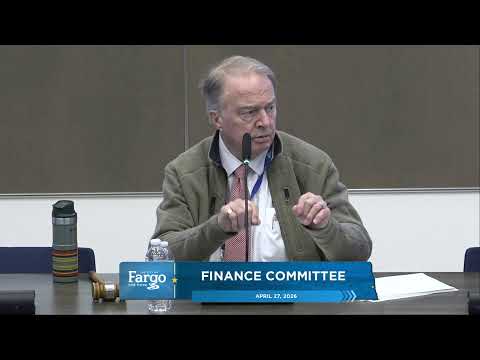
City staff told the mayor, commissioners and finance committee they are preparing an ordinance rewrite to clarify how Fargo licenses large public events and recoup city costs for police and other services.
The presentation by Kevin, the staff lead on special events, framed safety as the primary concern and said most regulated events occur in the public right-of-way (streets and alleys). He told the panel that last year the city handled about 70 events and that 12 event applications were already in the queue this season. “We really just need some conversation from you guys on where you want to be with the fees and in-kind contributions,” Kevin said.
Why it matters: commissioners and staff said the city is struggling to balance public-safety demands with keeping events affordable for nonprofit sponsors. Staff proposed a baseline administrative fee (Kevin cited a $250 preliminary figure) to cover safety reviews and routing to departments, with larger costs (security, temporary closures, inspections) charged or reimbursed as appropriate.
Captain Mosier of Fargo Police presented a staffing matrix—adapted from a university model—that the department uses to set officer levels based on event type, anticipated attendance and whether alcohol is present. He supplied a cost example: the downtown street fair required about $16,768 in police resources last year (roughly $4,500 overtime and about $12,200 in regular wages that the department counted as in‑kind contribution). “We use this as a guideline to start conversations based on the type of event and whether alcohol is present,” Captain Mosier said.
Staff and commissioners discussed how overtime and reimbursements flow. A finance staffer said event revenues currently post to the general fund rather than being tracked back to specific departmental budgets, so reimbursements do not automatically restore a department’s overtime line item. The chief noted that reimbursing event overtime to the general fund nevertheless helps overall budget positions.
Legal and operational limits shaped the options. Captain Mosier told the commission North Dakota law prevents officers from serving as private security for hire; instead, the city can bill event planners and reimburse departments. Staff said they are exploring training for third-party crews (background checks and supervised setup of barriers) to limit police deployments and reduce cost burdens.
Insurance and liability were another focus. Staff reviewed peer-city practices—examples included $1,000,000 to $2,000,000 insurance limits in other jurisdictions—and said the city has drafted a liability waiver for planners who decline mobile barriers after being offered them.
Commissioner Hancock recommended a pilot approach: “maybe we cook the frog slowly and do a pilot for a year or two just to see how it goes,” Hancock said, a suggestion staff welcomed as a way to refine fees, in-kind rules and enforcement without sudden changes for organizers.
What’s next: staff will return with draft ordinance language, a proposed fee/matrix and options for a pilot and stakeholder engagement. Kevin said July 1 might be optimistic for implementation, pending legal review and more stakeholder work.
Ending: The committee asked staff to continue refining the proposal with stakeholders, provide more detailed cost accounting, and present a clear menu of fee and in-kind options at a future meeting.