Get AI Briefings, Transcripts & Alerts on Local & National Government Meetings — Forever.
Library of Congress curator traces how artists and printers helped secure and popularize Yellowstone National Park
Loading...
Summary
At a Library of Congress presentation, Patrick Hastings showed how 19th‑century scientists, painter Thomas Moran, photographer William Henry Jackson and printer Louis Prang together persuaded Congress to protect Yellowstone in 1872 and brought its images to a broad public.
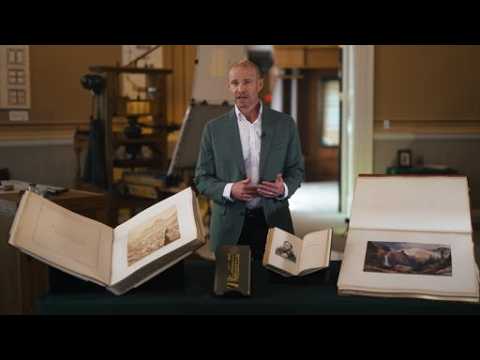
Patrick Hastings, a staff member in the Library of Congress’s rare book and special collections division, on Tuesday traced how scientific surveys, art and innovative printing helped persuade Congress to set aside Yellowstone as the nation’s first national park.
Hastings said Congress in 1872 passed legislation establishing Yellowstone and protecting roughly 2,200,000 acres after decades of fieldwork and visual advocacy by scientists and artists. “In 1872, Congress passed legislation establishing Yellowstone as the first national park,” he said.
Hastings summarized Dr. Ferdinand Vandeveer Hayden’s role as a scientific organizer and advocate: funded in 1871 by $40,000 in congressional funds, Hayden led an expedition of about 34 specialists, compiled a roughly 500‑page geological report on return, and urged lawmakers to preserve the territory. Hastings quoted Hayden’s description of the landscape as having “variegated colors all intermixed and shading into each other,” a phrasing Hastings said underscored the area’s scientific and aesthetic significance.
Hastings described how two different forms of image‑making shaped public and legislative opinion. Painter Thomas Moran’s watercolors captured the region’s vivid coloration and were displayed in the halls of Congress, which Hastings said helped influence lawmakers. Photographer William Henry Jackson, Hastings said, produced photographs that provided visual evidence for a broader audience; Jackson “transported 300 pounds of equipment across the region’s rugged terrain” to capture the images that appeared in Hayden’s report.
Hastings explained that early photographs were black‑and‑white and lacked color, while Moran’s watercolors reached only select viewers. He then turned to Louis Prang, a printer who reproduced Moran’s paintings in full color using chromolithography. Hastings described the method — drawing with an oil‑based crayon on limestone, using upwards of 30 stones to capture tonal depth — and said Prang’s workshop spent about three months preparing pigments on the stones and another five months printing 1,000 copies.
Hastings cited contemporary reactions to the 1876 book: it was hailed as a major achievement in printing (the Times of London said no finer specimen of chromolithographic work had been produced), and Hastings read Thomas Moran’s praise of Prang’s faithfulness in reproducing the watercolors. Hastings framed Prang’s efforts as a democratic impulse: reproducing artwork valued at about $10,000 and selling prints for less than $20 broadened public access to Yellowstone’s imagery, helping make the park’s features part of a shared national experience.
The presentation focused on the intersection of science, art and technology in the late 19th century and on how those forces combined to produce both argument and evidence that, Hastings said, helped persuade Congress to create Yellowstone National Park.