Get Full Government Meeting Transcripts, Videos, & Alerts Forever!
Get email alerts on the Infrastructure Water Sewer topic
No spam. Unsubscribe anytime.
Beaufort Jasper Water & Sewer warns of rising costs, proposes bonds and rate increases to pay $590M CIP
Summary
At the Nov. 25 committee meeting, Beaufort Jasper Water & Sewer officials described $590 million in capital needs, recent construction cost escalation and a planned $100 million bond issuance; the authority said rates and capacity fees will rise to cover projects and bond debt.
Beaufort Jasper Water & Sewer officials told the county’s finance committee that the authority faces pressing capacity and rehabilitation needs and is planning a multi‑year bonding program to fund an estimated $590 million capital improvement program.
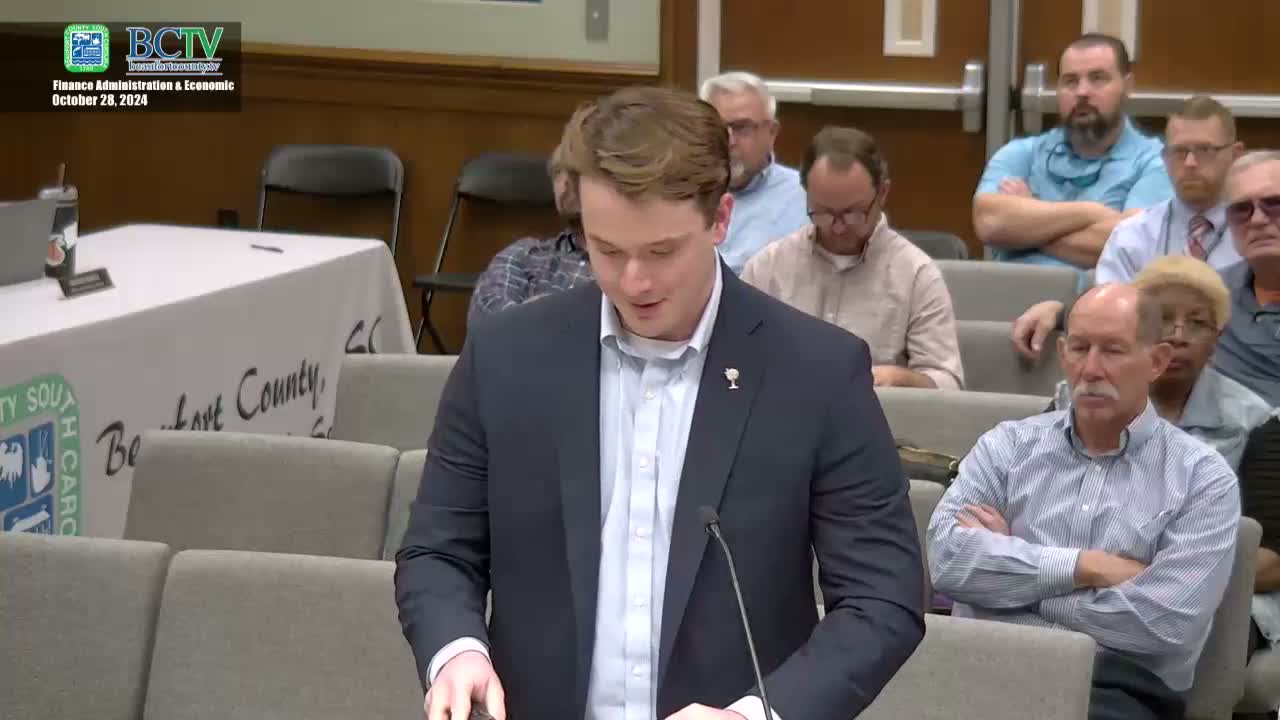
Charlie Stone, director of government affairs for the authority, said system demand is high — the Purrysburg water plant hit an all‑time summer peak near 35 million gallons daily against about 39 million gallons of capacity — and wastewater plants such as Cherry Point are operating near 90% capacity. The authority has 102 projects in its short‑term CIP and faces steep construction price escalation: Stone gave one example where a project’s design estimate grew from about $31 million to a low bid of $107 million.
To accelerate work, the authority’s board approved a $100 million bond issuance and plans phased bonding that could total roughly $450 million over time. Stone said the authority raised rates by about 9–10% this year and expects a roughly 5% increase in FY26, and that capacity fees are being phased in over three years with the first increase effective Feb. 1, 2025. The authority also reported $45 million in planned military‑support infrastructure projects and said it secured approximately $4.6 million in state Veterans Affairs grant funding for two projects.
Stone said the authority is coordinating regionally on projects that affect multiple jurisdictions, including a Parris Island main‑line replacement and the decommissioning and consolidation of small, aging plants. He warned that unfunded EPA mandates (PFAS treatment obligations, cited in April guidance) could add substantial costs, and urged continued partnership and grant‑seeking to limit rate pressure on customers.
Implication: The authority’s capital and regulatory challenges will require multi‑jurisdictional funding decisions and could produce recurring rate and capacity‑fee impacts for utilities’ customers. County leaders pressed for transparency on developer workshop outreach and requested follow‑up on projects that would serve military installations and underserved areas.
Next steps: The authority will continue project planning and bond scheduling; the county will coordinate on projects where jurisdictional contributions or ARPA/other grant funds are possible.